DMG MORI practices a strategy called Machining Transformation or MX Transformation. Dr. Tommy Kuhn, managing director at DMG MORI Digital, discusses this strategy, in which the digital transformation (DX) enables process integration and automation and realizes green transformation (GX).
Today we see a lot of different machines combined in the production line. For a simple part, you need several different kinds of machines. In the future, the number of machines will be reduced, but they’ll be more complex. We’ll be able to integrate more processes within one machine. This makes machines more complex, but production becomes easier. However, high-skilled workers are required, so one of our main tasks is digitization – we’re using the knowledge gained in the last 20 years and putting it into digital solutions, simplifying how to use machines. Our vision is to make them as easy to use as smartphones.
We’ll integrate artificial intelligence (AI) everywhere, because machine tools depend on a lot of conditions and are complex to optimize. Often there’s too much data, and then we use AI to simplify the programming of the machine. We use AI for planning, for the use of the machines. We’ll use it for troubleshooting. We offer a self-service solution where the customer can type in a problem and get an answer, if possible – if not, they’re redirected to our specialists who provide a solution.
We’ve invested a lot over the years in connectivity solutions: gathering all the data from the machine, storing it securely in a central space, then using AI technologies to work with it. It’s not our goal to replace workers, but we can simplify a lot – for example, having one worker for multiple machines. We have a new Tool Master application allowing workers to load and unload tools to a machine securely and safely and set it up without engineering knowledge. We can simplify all the processes around the machine, but in the end, we still need the workers.

Today’s high-skilled workers are very specialized, but in the future, we want to have high-skilled workers who can maintain or operate different technologies and types of machines. We’ll need some support mechanisms to ensure everything works correctly.
Most of DMG MORI’s typical customers are small job shops without much spare time, so they need solutions that work out of the box without spending extra time on setups. We offer our own solutions with the CELOS environment we’ve created, and our machines are fully equipped with digital components. When a customer buys a machine, it works and is fully connected.
We also offer many solutions, such as our DMG MORI Technology Cycles, on demand. When the spindle is running and the technology cycle is used, customers pay for it. If they don’t use the cycle, they don’t pay. Further business models are full license or a one-time test license so the manufacturing companies can work with it and see how they can support and fulfill their requirements. We want to ensure the small customers can use the full environment the larger customers normally have.
In-depth look: A conversation with Dr. Kuhn
In the manufacturing industry, the push toward digitization brings numerous benefits – yet it also brings numerous risks and challenges. We recently spoke with Dr. Kuhn about the company’s digitization strategy and how they’re working to make it as safe and user-friendly as possible.
How is DMG MORI working to increase digitization, and how is that helping customers?
Our overall strategy is Machining Transformation (MX). Today many different machines are combined in the production line but in the future, the number of machines on the market will be reduced; however they’ll be more complex. We will be able to integrate more processes within one machine, equipping the machine with automation and green transformation, and this is where we start with digitization.
While the machines become more complex, production becomes easier. Users won’t need as much space for the machines, but as the machines become more complicated, the need for skilled workers increases. Addressing this challenge is one of our main tasks in digitization – using the knowledge we’ve gained over the last 20 years, putting it into digital solutions, and simplifying how to use our machine. Our vision is to make it as easy as a smartphone.
How does artificial intelligence (AI) play into all this?
DMG MORI integrates AI everywhere, because a normal machine tool process depends on many conditions and it’s very complex to optimize on the algorithmic level. We can do that in several ways, but often there’s too much data, so we use AI to simplify machine programming.
We have several customers who have highly automized, fully process-integrated machines, but when we add additional automation, everything accelerates. We use AI to support the programming of the machine, for planning, for utilization of the machines, and for troubleshooting. Today we offer a self-service solution where the customer can enter a problem and, if possible, get a solution immediately. If there’s not a ready solution the customer is redirected to our specialists and we create a solution.
We can use AI solutions for the whole process chain – programming, operations, troubleshooting, maintenance. For this we need plenty of data from the machine so at DMG MORI we’ve invested a lot over the last few years in connectivity solutions to get all the data out of the machine, centrally store the data very securely, and then use AI technologies to work with that data.
Do you see the AI getting so advanced you won't have to hire a worker to use the machine, it’ll just run on its own?
Without any workers, we don't think so. But we can reduce how many are needed so it’s no longer one worker per machine, rather one worker for a cell of many machines. This is important for our customers if they have two or three shifts. They can go through the night shift without as many workers or unmanned. It's not our goal to replace the workers but we can simplify a lot for companies and their workforce.
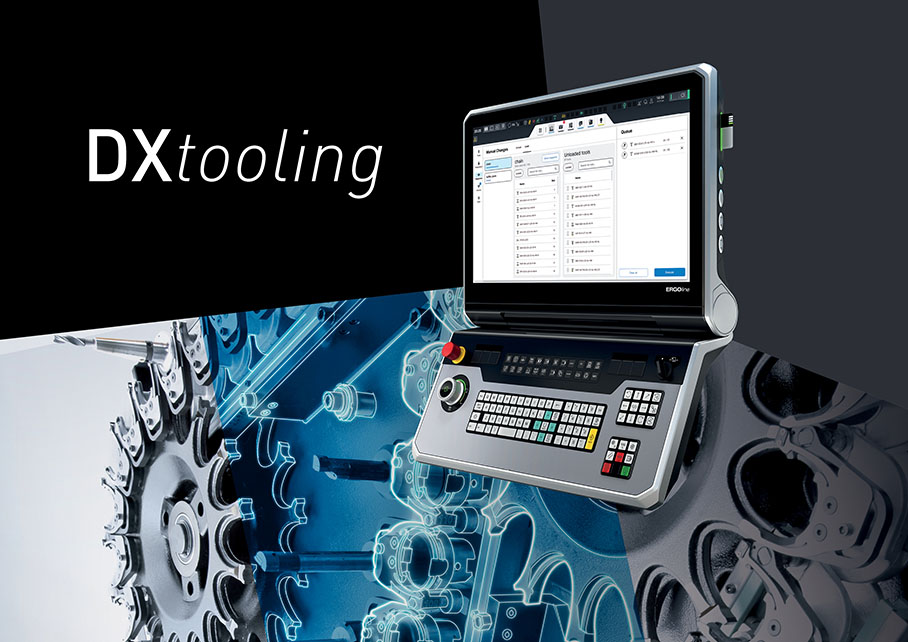
We have a Tool Master application to load and unload tools to a machine. For example, if I'm in software engineering, I can’t operate a machine tool but with Tool Master, it's possible for me to load and unload completely securely and safely. We can simplify all the processes around the machine, but in the end, we still need the workers.
DMG MORI has talked about “selling less but doing more.” Where do you see this concept going with automation and other technologies in the changing machine tool industry?
When I started with DMG MORI we sold machines. Since then, we sell machines together with automation. Today, we rarely sell any machine without any type of automation. Digitization is the key. Sometimes we go to customers to analyze their solutions and see they’re already highly automated, but the customer is looking for their actual return on investment (ROI). Achieving ROI on a fully automated solution can be complex as you need to organize how you do the programming and how you plan orders for these highly automated cells.
If something doesn’t work inside an automated cell, the whole cell doesn’t work, which is where we approach a situation such as this with our digital solutions to analyze the status of the machines to deliver a solution that delivers the ROI expected. One thing also to note about how digital solutions play in a situation such as this is whenever you have a highly automated environment, predictive maintenance is a necessity.
Some small-to-medium enterprises (SMEs) haven’t taken on automation or digitization because they don't feel they have the tech and the talent to do it. They're afraid to take that jump. How can DMG MORI help these people feel comfortable that this big investment is going to be worth it?
DMG MORI’s typical customers are job shops and companies up to 20 machines, 50 people. We offer our digital solutions, and everything we do, as standard so we avoid having a customer invest a lot before they see it really works and has an impact. Big companies run projects across months or years and implement and optimize everything, but many small customers don't have their own IT or network. Because of smaller customers’ situations we work to implement as much as possible for them.
Often, the managing director of a smaller facility is also working in production, so they need solutions that work out of the box. We can put a lot of this inside our machines – a DMG MORI machine is different, it’s not the standard. A DMG MORI machine is our own solution with the CELOS environment we’ve created, and we put everything inside the machine so it’s fully equipped with digital components and ready to use. In the future, we’ll also offer mobile connectivity.
Customers can also test all our solutions. Many are included in the machine without additional charge. Some other services do come with a charge, but we always allow the customer to try the solution without an upfront investment.
We also have our Technology Cycles, which are a good investment for customers who use them all the time. But for job shops that need them once a year, we offer these kinds of services on an on-demand basis. It's calculated exactly when the spindle is running – when the cycle is used, they pay for it; if the cycle isn’t used, they don't pay for it. Additionally, they have a free trial period so they can work with it and see if it fulfills their requirements. Then they can buy what we call a spindle hour package – say, 100 spindle hours. We want to ensure the small customers can use the same full environment the big customers have.
For smaller job shops to get government contracts with the U.S. Department of Defense, they need to make sure their data and processes are secure. They need traceability for every part. How does DMG MORI support these needs?
As the world changes, we’ll see much more regulation, and this is why we build our machines in a closed digital environment. We’ve created a whole platform, embedding the machine in a full digital environment which is scalable so users can run the machine completely offline, or it can be partially connected. The customer can decide exactly which data to share in a cloud environment. We also have shopfloor-oriented services, where the data stays on the shop floor, but everything is controlled by our connectivity solution, a closed environment. So, DMG MORI can fulfill all these kinds of requirements.
A few years ago, we started CELOS Xchange which is our central platform for the customers to store their data. The data is always owned by the person or company that owns the machine.
Now, we’re happy if customers agree to share some data with us, because it helps us improve our services and do some optimization. If you have some insights into the machine, we can do predictive maintenance and proactively set up service requests, but customers can fully control where they store their data and what kind of data they share.
Where did you first see it coming from, that this security and data protection would be needed?
Europe is leading because they have many restrictions and regulations such as the EU-CRA. There are real scenarios we can identify where we see it’s really needed, and it’s much more important today to ensure security of the data. Doing pen tests and having firewalls and security isn’t enough, it goes deeper into the machine and the environment. Every DMG MORI machine has several small chips with a little piece of firmware so we can go down to the sensor to identify if there are any vulnerabilities, making the machine completely secure.
We are also keeping our machines secure not only from an attacker or a hacker coming from outside, but by inspecting every part that goes into a machine. We have machines built from parts we get from some vendors, and they may get their parts from their vendors so we must know exactly what's going into the machine. This is what we also do with our digital platform. It was a good decision that we began with a kind of no-trust approach when we started to develop our platform. We only trust the solutions we build, and we don’t rely on anything unknown.
With this built into the machine from the ground up, are you able to offer any of this retrofitted to older machines that might not have had as much security?
Normally, in the digital industry, you develop for the newest hardware. In the machine tool industry, we assure our customers that if they buy a machine from DMG MORI and it lasts for, say 20 years, we will do our best to support everything for the next 20 years. This is also why we do this kind of digitization, because a lot of things will change, so we must keep the machines current.
DMG MORI
Explore the January/February 2026 Issue
Check out more from this issue and find your next story to read.
Latest from Today's Medical Developments
- ZOLLER now accepting submissions for 2026 Toolroom of the Year competition
- SMW Autoblok expands mechatronic gripper line
- “Innovation in miniature”: The Lee Company dedicates new center to advanced solutions
- Walter introduces four new copy turning geometries
- SINTX hits clinical milestone with foot & ankle reconstruction device
- What’s ahead for the aerospace industry this year
- Lightweight, portable exoskeleton helps stroke survivors walk
- Accelerate your shop floor with smart automation strategies