According to Dr. Philipp Lang, ConforMIS founder and CEO, ConforMIS was founded in 2004 on the simple idea that implants should be made to fit the patient rather than fitting the patient to the implant. With a background in imaging technology, ConforMIS was able to develop an approach that allows them to capture precise data on the 3D structure of a joint, and in many cases, to recreate the normal knee geometry – helping to avoid many of the post operative complications. "If you fit the implant to the patient, you preserve most, if not all, of the bone," Dr. Lang explains. "However, if you fit the patient to the implant, you have to cut and remove a lot of bone, and this is where the postoperative pain and many of the long-term problems with traditional implants start."
Using a comprehensive line of patient specific knee resurfacing implants and instrumentation to address osteoarthritis, data from a patient's individual CT or MRI scan is generated into a 3D model of the patient's knee. This information is then used to design and manufacture an implant that conforms precisely to an individual patient's anatomy. Part of the process includes mapping the surface topography of the patient's joint to create implants that conform to existing healthy tissue. "In many of our implants," explains Dr. Lang, "the process also includes taking data from additional portions of the leg to integrate the biomechanical axis into personalized cutting guides that simplify the implant process. Ultimately, this patient-specific approach minimizes the need for bone resection, reduces surgical and recovery time, and decreases post-operative pain."
iForma, one of the four implants developed by ConforMIS, is made out of colbalt-chromium molybdenum. The implant helps fill the lost cartilage, restore the knee's proper alignment, and prevent painful rubbing of the bones during ambulation. Since iForma is made for each individual patient, it allows the surgeon to easily insert the device into either the medial or lateral compartment using a metal grasper and because the implant conforms to the bony structure of the tibia, it stays in place without the need for cement or screws.
Addresses All Stages
A total knee replacement (TKR) consists of replacing all three compartments – the medial, lateral and patellofemoral. In addition to the iForma interpositional device, ConforMIS offers implants that customaddress all the stages of osteoarthritis – uni-compartmental, bi-compartmental and tri-compartmental disease. There is the iUni resurfacing implant, designed to treat uni-compartmental disease in either the medial or lateral compartments. iDuo resurfacing implant is designed specifically for bi-compartmental knee repair, involving either the medial or lateral compartments and the patellofemoral compartment behind the knee cap, while the iTotal resurfacing implant treats tricompartmental disease.

Above is the front view of a ConforMIS customized implant.
"Studies of knee implants using similar alloys and concepts to those made by ConforMIS have shown a typical life expectancy of between 10 and 15 years, depending on the patient's activity level," says Dr. Lang. "Since ConforMIS implants dramatically reduce the amount of tissue resection required, we believe that they are a well-suited treatment option for young, active patients. Many younger patients are not good candidates for a total knee replacement because of the invasive nature of the surgery and the risks involved in revision surgery."
Another positive for knee surgery candidates is that since the ConforMIS implants require minimal to no bone and tissue resection, the patient's knee is preserved for future surgical intervention. Likely candidates for iForma are patients with early to moderate osteoarthritis of the knee, including those who are experiencing pain in either the medial or lateral aspect of the knee with activities; those with swelling in the knee; those who no longer receive pain relief from NSAID's or injections; and those who want to avoid an invasive traditional knee replacement.
All four of the ConforMIS implants are FDA 510 (k)-cleared while the iForma and iUni are CE-marked. Presently, more than 400 patients have been treated with the iForma. The iUni was released February 25, 2008. The iDuo is currently in limited release with a core of trained surgeons with release to a broad group of surgeons expected by mid 2008.
Step-by-Step
Starting with a CT or MRI scan done on commonly available machines along with a standardized protocol provided by ConforMIS to ensure high quality data is where the image-to-implant process begins. That data is then sent to ConforMIS where a CAD program with proprietary programming generates a 3D model of the patient's knee. Utilizing the CAD software, individual anatomic information from the pre-operative images are extracted in order to provide the design and manufacturing team with 3D images of the knee, which will guide the creation of the precise implant that will conform to that particular patient. "Armed with that information, it is used to fabricate the patient-specific implant and custom instrumentation, which takes about four to six weeks," says Dr. Lang.
Before any of this can begin, the physician must determine if a patient is even a candidate for a ConforMIS implant. Quite often, patients state that the pain is coming from the whole knee, but determining the origin of the pain, through standing X-rays, in conjunction with a complete history and physical exam is important. If the pain is isolated to one compartment, the X-rays will show narrowing of the joint space, and the anterior cruciate ligament (ACL) is intact, then chances are this patient is a candidate for the procedure.

iForma helps to fill the lost cartilage, restore the knee's proper alignment, and prevent painful rubbing of the bones during ambulation.
Once the qualifications of being a candidate are met, the MRI process begins, as previously detailed, with the results being sent to ConforMIS for design and manufacturing. After delivery of the implant, the surgeon will implant the part utilizing the iJig instrumentation that creates a minimally invasive procedure requiring no bone cuts or cartilage shaving. As with any knee surgery, the post-operative exercise is essential for a positive outcome, since the knee is relatively unprotected until the patient builds up the surrounding muscles.
Producing Implants
Implants are manufactured through ConforMIS contract manufacturers using milling techniques for some of the devices, and castings for the larger resurfacing devices, such as the iTotal. In addition to machining the implants, manufacturing of patient-specific disposable instrumentation, called the iJig, is also required. "iJig automatically provides proper alignment of all tools for the patient individualized anatomic and biomechanical axes, and is manufactured using milling or rapid prototyping," explains Dr. Lang. "The iJig disposable instrumentation used in the implant process replaces between $15,000 to $25,000 worth of traditional instrumentation."
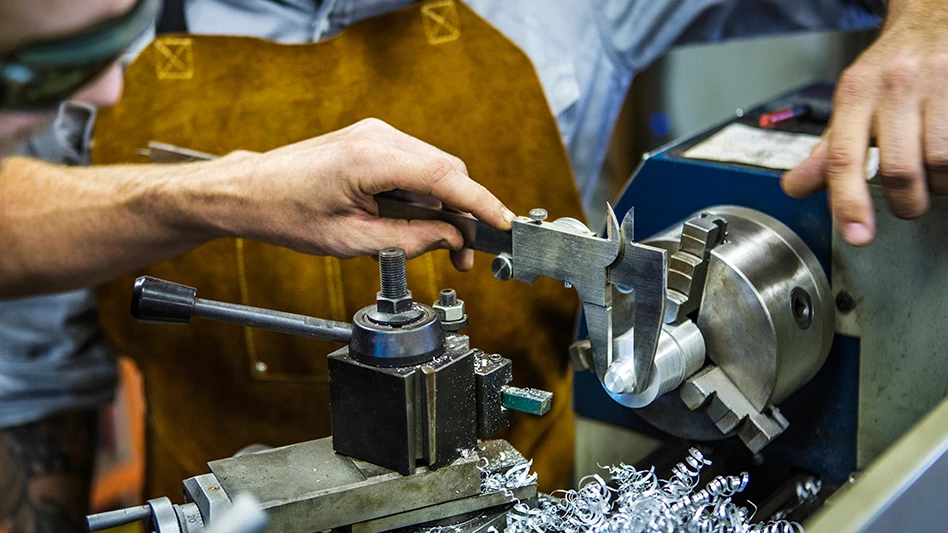
One contract manufacturer for ConforMIS devices is Micron Products and its Micron Integrated Technologies (MIT), and Leominster Tool divisions. Micron secures the material and then machines the devices on 3- and 5-axis machining centers. In addition, Micron provides part marking, passivation, sterilization and polishing – the complete part that's ready to go to the patient, while the Leominster division provides all of the tooling, fixturing, and machining of the iForma.
Utilizing standard milling techniques on a 5-axis machine, Micron first receives a CAD file from ConforMIS that includes the patient-specific implant dimensions. Once transferred to the machine, the implant is made to the patient-specific dimensions. By providing all manufacturing services in-house, Micron is able to tightly control the quality process. This, coupled with process efficiencies, has greatly reduced the time required to go from art to part, representing a big advantage for ConforMIS. Previous suppliers required four weeks to download the CAD file to the CNC machine, but Micron has turned that process into only five days, with hopes of reducing it to only three days.
According to Dr. Lang, "ConforMIS has a mission to provide best-in-class, patientspecific implants and instrumentation that minimizes the trauma and scarring, and has improved the limited reproducibility often associated with traditional orthopedic implant surgery." Having the imageto-implant process internal at ConforMIS and working with contract manufacturers such as Micron, seems to be producing the best-in-class they are looking for.

Explore the March 2008 Issue
Check out more from this issue and find your next story to read.
Latest from Today's Medical Developments
- NextDent 300 MultiJet printer delivers a “Coming of Age for Digital Dentistry” at Evolution Dental Solutions
- Get recognized for bringing manufacturing back to North America
- Adaptive Coolant Flow improves energy efficiency
- VOLTAS opens coworking space for medical device manufacturers
- MEMS accelerometer for medical implants, wearables
- The compact, complex capabilities of photochemical etching
- Moticont introduces compact, linear voice coil motor
- Manufacturing technology orders reach record high in December 2025