In today’s medical manufacturing landscape, the pressure on medical device original equipment manufacturers (OEMs) is relentless, balancing complex designs, tighter tolerances, changing regulatory demands, and faster time-to-market expectations all at once. OEMs can manage this pressure by partnering with a contract manufacturer supporting production needs and reinforcing long-term success through proactive, value-added practices. Among the most critical of these is mold care.
For OEMs evaluating contract manufacturing partners, mold care isn’t simply routine maintenance. It’s a strategic advantage demonstrating a supplier’s ability to deliver high quality, reliable parts.
Every participant in the supply chain from material manufacturers to injection molders to device OEMs knows there’s no room for error because behind every part produced is a patient whose health, safety, and quality of life depends on it. A single quality lapse, late delivery, or failed inspection impacts the bottom line, strains customer relationships, delays critical treatments, and compromises patient safety.
The ripple effects can be even greater. Downtime during validation or production causes schedules to slip and supply chains to falter. Scrap and rework quietly erode margins, while missed ship dates jeopardize compliance and customer trust. For OEMs this makes a contract manufacturer’s approach to mold maintenance a critical part of supplier selection and ongoing risk management.
In this high-stakes environment, preventive tooling maintenance has evolved from a behind-the-scenes activity into a key success driver. Too often overlooked, it’s a vital competency in meeting today’s requirements. A disciplined tooling care program isn’t just about keeping molds running. It’s about protecting compliance, profitability, and reputation while giving OEMs confidence their partners can deliver consistently and without disruption.
As medical device OEMs navigate the complex process of selecting the right contract manufacturer to maintain and operate their tooling, it’s essential to identify the attributes signaling true proactivity and meticulous attention to detail. The following four characteristics serve as critical benchmarks for evaluating and choosing a trusted partner.
Choose a partner who delivers precision and ROI without compromise
Tooling precision is non-negotiable in medical manufacturing. A mold drifting out of tolerance risks downstream quality failures, delayed schedules, and loss of OEM confidence. At the medical device level, such failures can compromise device performance and patient safety.
OEMs evaluating partners should look for evidence of proactive care going beyond accuracy to deliver long-term return on investment (ROI). The most reliable suppliers combine strong Design for Manufacturing (DFM) at the start with deep resin knowledge and disciplined maintenance programs throughout the life cycle to ensure repeatability, accuracy, and performance.

The foundation for avoiding these risks starts at the initial tooling design stage. Applying DFM principles early in development simplifies construction, reduces delicate features, and improves accessibility for upkeep. These choices lower the risk of premature wear and make preventive maintenance more efficient throughout a mold’s lifespan.
Resin choice further underscores the importance of this discipline. Many high-volume medical components, particularly disposables, are molded from polypropylene (PP) or polyethylene (PE). While these resins deliver reliability and cost-effectiveness, they still create cumulative stress on tooling over millions of cycles. More advanced resins in specialized applications can push molds even harder, accelerating wear and raising compliance risks. Properly designed tools and preventive maintenance programs designed to anticipate these stresses protect dimensional stability, extend tool life, and keep costs predictable across all resin types.
The right partner delivers documentation that ensures compliance and builds trust
Compliance is as much about documentation as it is about tooling performance. Preventive mold maintenance directly supports regulatory readiness by providing traceable histories, documented procedures, and verifiable records proving molds have been cared for within specification.
During the vetting process, OEMs should ask prospective partners to demonstrate these capabilities and provide examples of how they document mold care to meet regulatory standards. Whether processes demonstrating attention to documentation from the start, or practical examples of times your contract manufacturer has helped a company get up to speed with documentation of transferred tools, this competency is critical to explore.
For OEMs, this traceability provides confidence manufacturers can deliver consistent, compliant parts on time. Maintenance logs, inspection records, and digital histories demonstrate process control and audit readiness. By sharing this documentation proactively, manufacturers show transparency and accountability – qualities reducing the risk of nonconformance and revalidation while building long-term trust.

Achieve peak performance with partners blending data and moldmaking expertise
Leveraging data to inform tooling upkeep is no longer optional. Modern programs use sensors and monitoring tools to forecast maintenance needs before defects occur. In-mold sensors track cavity pressure, mold temperature, and cycle counts in real time, triggering service alerts at tool-specific thresholds. Thermal imaging, ultrasonic testing, and inspection data provide visibility into wear trends long before failures arise.
Yet technology is only half the story. Skilled moldmakers remain indispensable to preventive maintenance. They interpret subtle changes, identify early warning signs, and apply corrective measures no algorithm can fully replicate. Experienced toolmakers detect wear patterns, thermal imbalances, and dimensional drift analytics may miss, ensuring interventions extend tool life instead of reacting after performance slips.
Moldmaking combines data-driven insight with skilled craftsmanship to achieve the consistency and precision medical manufacturing demands. For OEM engineers, buyers, and operations leaders, contract manufacturers integrating predictive analytics with hands-on expertise deliver the greatest value, ensuring downtime is planned, costs are managed, and parts remain in spec.
Strategic mold maintenance ensures OEM compliance and reliability
A strong preventive tooling maintenance program creates a foundation for repeatability, precision, reliability, and competitiveness. When elevated to a disciplined strategic capability, it transforms tooling into a long-term asset consistently delivering financial and operational returns.
Not all partners are equipped to deliver at this level. A contract manufacturing organization (CMO) with deep tooling expertise, an in-house tool shop, and proactive communication demonstrates true commitment to strategic maintenance. Skilled teams anticipate and prevent issues, safeguarding uptime, extending tool life, and protecting compliance.

This proactive approach moves mold care from a reactive cost center to a proactive growth driver. Predictable, disruption-free operations accelerate delivery, safeguard quality, and build reliability.
By extending mold life, minimizing scrap, and preventing costly disruptions, disciplined tooling maintenance reduces total cost of ownership and makes a supplier dependable and economically invaluable. Proactive programs can cut unplanned downtime by double-digit percentages, extend service life by years, and deliver rapid returns on preventive maintenance investments.
With rising regulatory demands, preventive maintenance ensures molds perform within spec, reducing compliance risks and costly revalidation. OEMs gain a partner who safeguards patient safety while ensuring efficiency and competitive advantage.
Turn preventive maintenance into your competitive edge
Amid rising demands for tighter tolerances and stricter regulatory oversight, preventive tooling maintenance is a key differentiator OEMs should look for in manufacturing partners. By treating molds as long-term assets, proactive programs extend service life, reduce downtime, and protect capital investments otherwise spent on expensive new tooling.

That’s why strategic mold maintenance is essential to ensuring compliance and reliability. Disciplined care keeps tooling validated and repeatable, preventing last-minute changes that can stall FDA approvals. Consistent mold readiness shortens validation cycles and accelerates time to market.
Just as importantly, OEMs should choose partners who deliver precision and ROI without compromise. Proactive care preserves dimensional accuracy across millions of cycles, safeguarding device performance and design integrity.
To achieve true operational excellence, OEMs need partners blending data and moldmaking expertise. Predictive analytics forecast maintenance is needed before defects occur, while experienced toolmakers interpret subtle wear patterns and apply corrective measures. Together, data and craftsmanship maximize performance and minimize downtime.
Finally, thorough records of tool history, validation steps, and service interventions meet regulatory requirements and strengthen supply chain resilience and audit readiness.
By combining these disciplined practices, OEMs realize vital outcomes in cost savings and operational performance. Extending tool life reduces the need for new molds while lower scrap conserves material and energy. Together these disciplines deliver a competitive edge, proof of faster regulatory readiness, sustained precision, stronger supply chain reliability, and, most importantly, patient safety.
Hoffer Plastics Corp.
https://hofferplastics.com
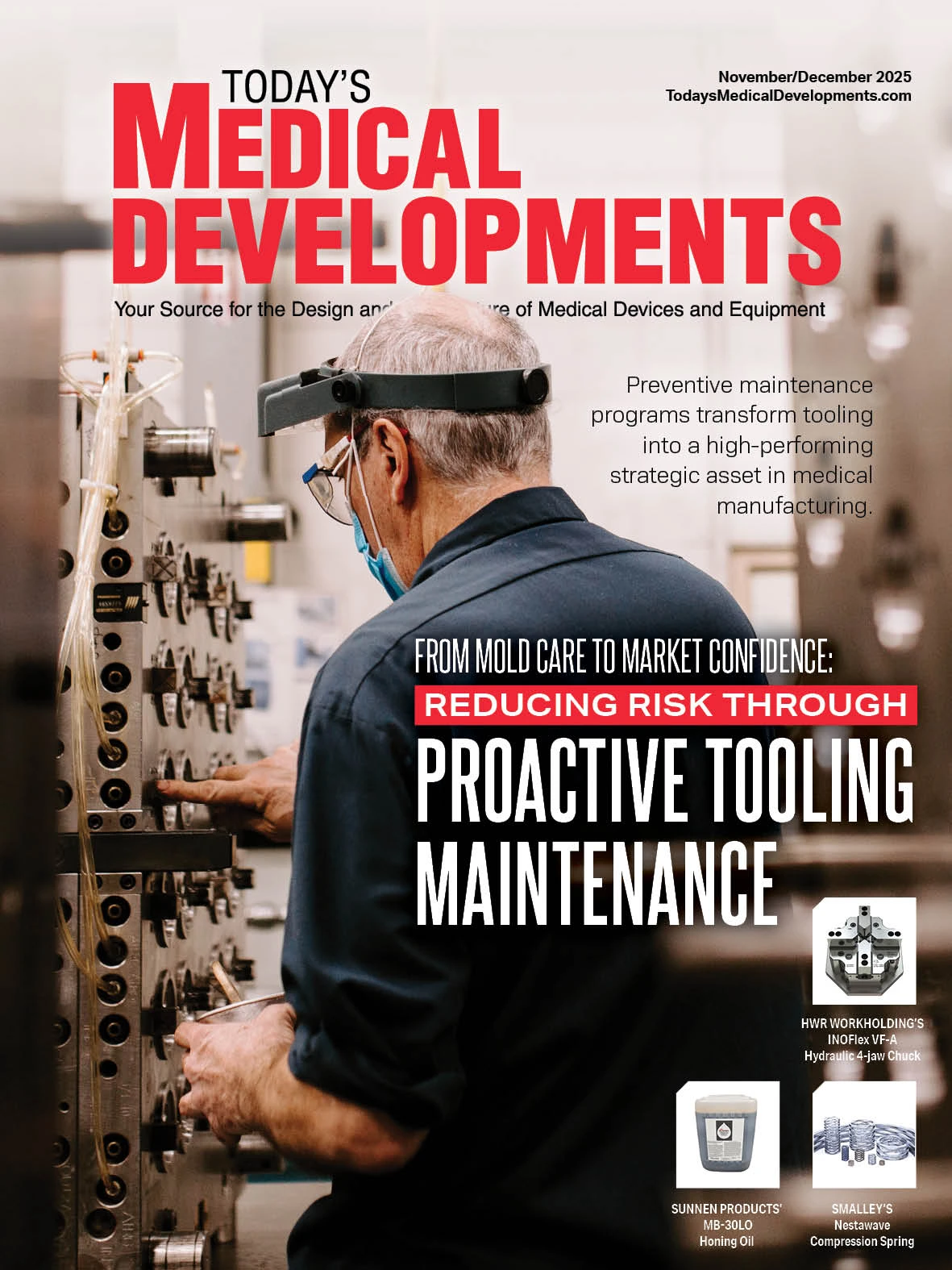
Explore the November/December 2025 Issue
Check out more from this issue and find your next story to read.
Latest from Today's Medical Developments
- NextDent 300 MultiJet printer delivers a “Coming of Age for Digital Dentistry” at Evolution Dental Solutions
- Get recognized for bringing manufacturing back to North America
- Adaptive Coolant Flow improves energy efficiency
- VOLTAS opens coworking space for medical device manufacturers
- MEMS accelerometer for medical implants, wearables
- The compact, complex capabilities of photochemical etching
- Moticont introduces compact, linear voice coil motor
- Manufacturing technology orders reach record high in December 2025