Editor's Note: This article originally appeared in the March 2026 print edition of Today's Medical Developments under the headline “A three-dimensional approach to medical device development”.
From organ models for surgical planning to implants personalized to a patient’s unique anatomy, the capabilities of 3D printing have been generating excitement in the medical industry for several decades – and indeed, it’s fascinating to follow the rapid advancements of the technology. It’s not just the printing itself, however, responsible for these often lifesaving developments. Without the software advancing right alongside it, 3D printing wouldn’t get far.
Belgian software developer Materialise has been creating 3D printing software since 1990, before most of the general public had ever heard of 3D printing. One of the earliest innovators in medical 3D technology, Materialise began connecting medical data to 3D printers with its Mimics software within two years of its founding. This led to the idea of creating 3D prints of patients’ anatomy for surgical planning, education, and overall better understanding of individual medical conditions.
Today, Materialise offers dozens of 3D software solutions for medical applications, including 3D design and modeling, planning, and research. While anatomical models are still a common use of 3D technology, its capabilities have grown to include implants personalized to individual patients.

A complex world of 3D technology
Creating a personalized implant requires much communication and collaboration between clinicians and 3D technology providers such as Materialise. Once a clinician decides a personalized implant may benefit a patient, a CT or MRI scan is taken of the patient’s anatomy and sent to the service provider, who creates a 3D model and a plan proposal and sends it to the clinician for alteration and/or approval. The service provider then designs the device, sends it to the clinician for approval once again, then either manufactures and ships it or outsources the physical production to another company.
This process, with all of its back and forth, involves more different types of software than you might expect.
“First and foremost, you need to have a platform that allows you to streamline this communication and the transfer of data back and forth between the hospital and the company, that has the right steps in place and gives visibility to the clinician. It also has all the information and data you need for your quality management system. So that typically serves as kind of a back-end platform to support the whole process,” explains Sebastian de Boodt, business line director – Medical 3D Software at Materialise.
“But then there are a lot of tools you need on top of that. You typically need some more engineering toolboxes to do the segmentation, the planning, and the design. Lastly, you need some very easy to understand planning interfaces for the physicians who are not used to the very complex engineering tools the engineer would use. They would want to have a very intuitive, very simple visualization of the plan in a way that they’re used to, and that allows them to make some easy adjustments and give some easy comments back toward the clinicians.”
In addition to helping healthcare professionals design and manufacture medical devices, Materialise also markets its software to medical facilities or companies wanting to create their own personalized solutions. However, despite the fact that many healthcare facilities, particularly larger ones, are implementing their own 3D printing centers, the line between hospital and shop floor isn’t blurring as much as some may think. There’s been some concern about the regulatory implications of hospitals 3D printing medical devices themselves, thus becoming manufacturers, but those cases aren’t common. Most often, hospitals are using the technology to print anatomical models, which aren’t as heavily regulated as implants or other devices.
Point-of-care 3D printing is occurring in some clinical settings, but the applications are still limited mainly to anatomical models, and guides and implants in specific cases. According to de Boodt, that’s not a bad thing, because the limitations allow collaboration between clinical and industrial providers to thrive. Having 3D technology such as pre-operative planning in-house lets hospitals bring device development closer to the patient, but when it comes to new devices and products – things that will be regulated and commercialized – they tend to defer to medical device manufacturers.
Scaling up personalized medicine

The value of 3D printing in personalized medicine has been apparent ever since the first patient-specific anatomical models were created several decades ago; the next goal is mass personalization.
“If we want this to have a much broader impact on many patients, we need to find ways to make it scalable. That’s where mass personalization comes in,” de Boodt says. “How can you take a concept that works for a single patient – that’s often very complicated to do and therefore not economically viable – and use automation to bring down the cost so this really becomes accessible and affordable for many more patients?”
Combining technologies is key to answering this question. In addition to 3D and automation, many companies have begun using virtual reality (VR) and augmented reality (AR) to improve the sizing and placement of implants, as well as AR for intraoperative guidance. Implant planning and design still requires some manual work, especially in extremely precise applications such as craniomaxillofacial reconstruction, while other applications have become almost fully automated.
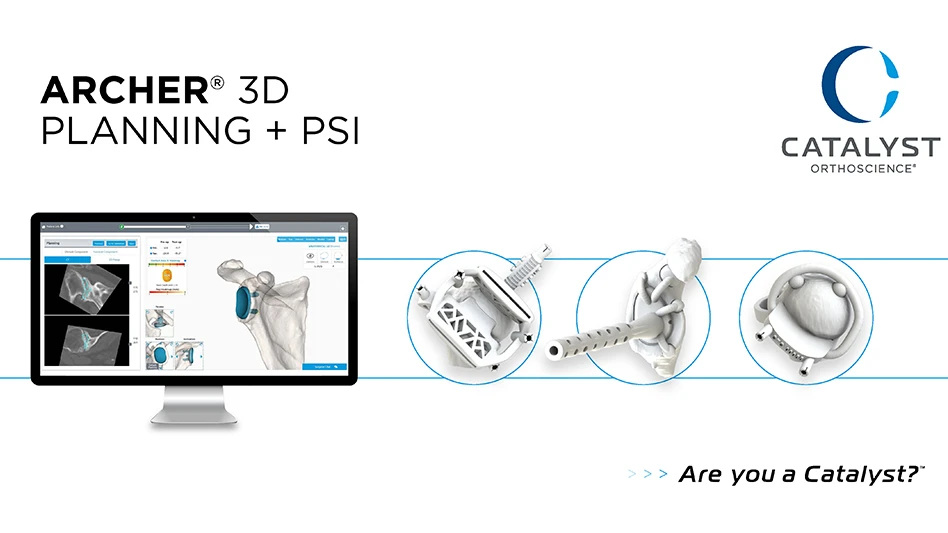
“Ten years ago when we started offering shoulder implant planning and surgical guides, everything was done manually,” de Boodt says. “Today, more than 90% of shoulder planning is fully automated, from image conversion all the way to planning, and everything just happens in 10 to 15 minutes without any person involved. You can offer this to many more patients, because it’s much faster, but also it becomes commercially much more viable.”
Medical device manufacturers accustomed to producing standard parts may need to adapt their strategies to enter the personalized medicine space, de Boodt continues. For example, the manufacturer-clinician interaction many personalized devices require is new to traditional manufacturers, who may need to add clinical engineers to their team for surgeon-facing applications.

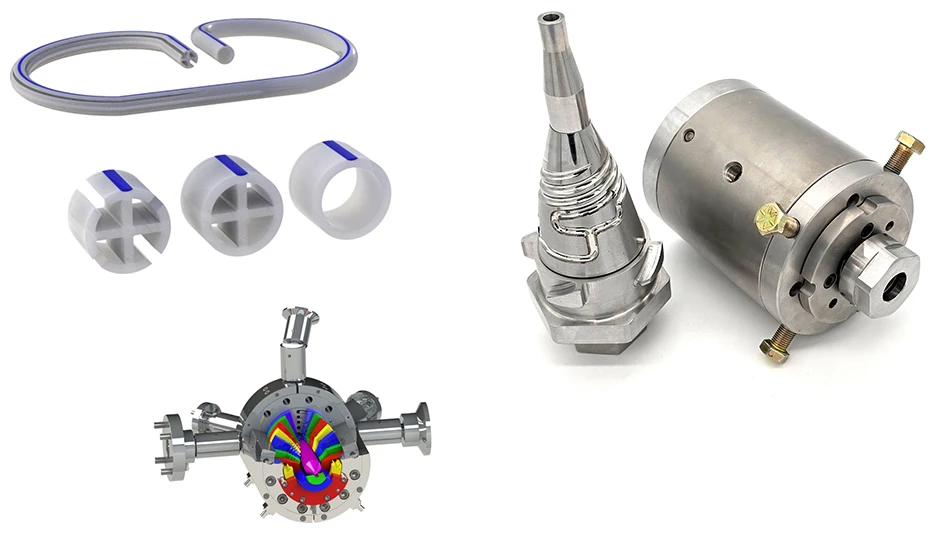
3D technology doesn’t require a complete overhaul, however – it’s an excellent complement to traditional manufacturing methods. According to de Boodt, 3D virtual planning is making an even bigger impact than printing. Many manufacturers use the technology to design and plan medical devices and surgical tools that will be machined or molded.
Evolving to meet patient needs
The technology enabling personalized medicine will continue to advance. Materialise is advancing 3D-printed bioresorbable implants, including a tracheal splint developed with University of Michigan Health and Michigan Medicine. Surgeons used Materialise Mimics to create the design, and early emergency FDA-clearance surgeries successfully treated around 40 pediatric patients through FDA Expanded Access pathways. If clinical trials prove successful and FDA approval is granted, Materialise will manufacture the splints at specialized facilities and ship them to hospitals, ensuring consistent quality without needing in-house 3D printing infrastructure.
Materialise has partnered with numerous companies to streamline everything from design to implementation. Whether a device is personalized or standard, 3D technology offers an alternative to testing multiple physical prototypes to fine-tune design, reducing time and cost through virtual planning. More importantly, it improves patient experience by allowing surgeons to be better prepared from the start, preventing multiple procedures and promoting improved healing.
Materialise
https://www.materialise.com
Explore the March 2026 Issue
Check out more from this issue and find your next story to read.
Latest from Today's Medical Developments
- Manufacturing technology orders reach record high in December 2025
- Kennametal introduces Machinist of the Year program
- User-friendly, automated AM post-processing systems
- Tools for Schools program invests in future of manufacturing
- How should you approach automation?
- US Paralympian partners with Autodesk to advance high-performance prosthetics
- Take a break and learn something new about manufacturing over lunch
- DMG MORI to invest more than $40.5 million in Illinois expansion