Of the linear motion technologies available today, one relative newcomer is the integrated stepper motor linear actuator.Practical and beneficial industrial applications for linear motion have increased dramatically in the past decade, as has demand for overall machine reliability. In response to this demand, linear motion components must provide accurate positioning, high speed, and long life with low maintenance. Of the linear motion technologies available today, one relative newcomer – the integrated stepper motor linear actuator – exceeds these requirements. This integrated product combines a stepper motor linear actuator with mechanicals and electronics to form a single, compact system. It also delivers the added benefits of reduced machine size, lower cost, and shorter time-to-market.
The Challenge
There are a number of linear motion technologies available to machine designers, each with advantages and disadvantages. Where machine cost is critical, stepper motor-based linear motion solutions can significantly reduce system cost. For applications requiring high accuracy and repeatability, linear motion systems with belts and pulleys or rack and pinion are unlikely to meet performance specifications. For clean and quiet operation, hydraulic and pneumatic systems are inappropriate.
Mechanical linear motion technologies that provide high performance and reliability, clean operation, and low maintenance include: linear motor, linear slide with rotary motor, and stepper motor linear actuator.
A linear motor is essentially a stepper motor where the stator has been unrolled so that instead of producing torque (rotation), it produces linear force along its length. Linear motors allow direct coupling to the load and deliver high performance, but at a comparatively high cost. Pricing a linear motor system must include costs for a complete stage, or enclosure, with linear bearings, limit switches, cable track/carrier, protective bellows, and linear encoder.
The Linear slide with rotary motor consists of a frame-mounted carriage that travels along a lead or ballscrew. A rotary motor is mounted to one end of the frame where it is coupled to the screw that it turns to produce linear motion. Advantages of this technology are accuracy and repeatability, with support provided by the frame already in place. Disadvantages are the high cost of components and locating or designing an adapter for the motor interface.
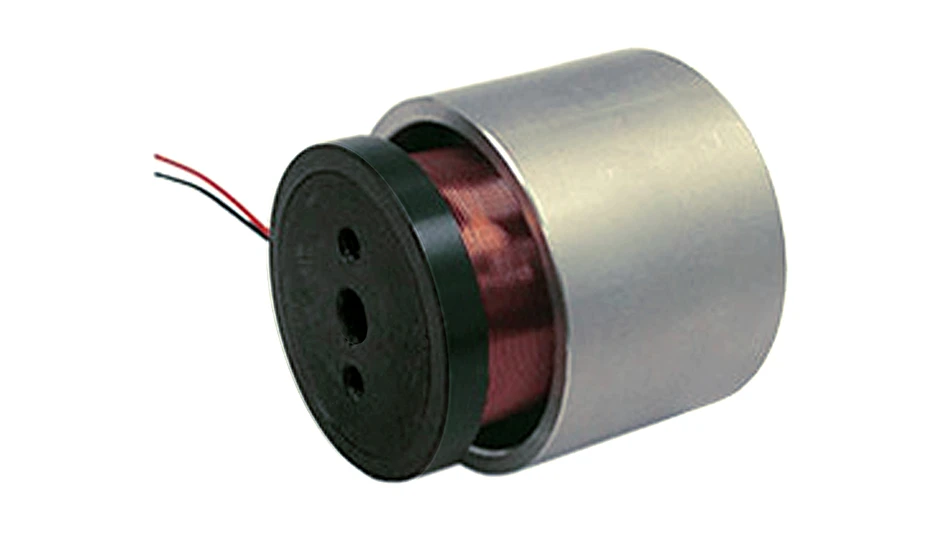
Stepper motor linear actuators use a threaded shaft inserted in a nut that is integral to the motor’s rotor. Linear motion is produced by the rotation of the threaded shaft, which can be coupled to a load using a variety of methods. Versatile, low-cost stepper motor linear actuators are available with different shaft styles, including:
- Non-captive shaft style: the threaded shaft, extending through the motor, moves axially with the rotation of the nut integral to the motor’s rotor.
- External shaft style: the threaded shaft, integral to the motor’s rotor, rotates to move a shaft-mounted nut axially.
For a complete linear motion system, each of the previous linear motion technologies require additional components, including a compatible stand-alone controller, drive, encoder, and cabling. One technology, the stepper motor linear actuator, is available with all of these components integrated into a single, compact linear motion product not much larger than the linear actuator alone. In addition, the integrated stepper motor linear actuator can significantly lower cost and complexity for many linear motion systems.
Integrated Solutions
In response to increased demand for smaller, low cost machines, machine designers are trending toward motion component solutions with reduced size and price. Integrated motion control solutions — all-in-one rotary motor with drive and/or controller and encoder — represent a rapidly growing market segment that can deliver savings. Now, the same benefits are available with integrated stepper motor linear actuator systems, which integrate linear motion mechanics with the motor and electronics.
Integrated motion control products, both rotary and linear versions, reduce the factors that impact the cost of designing and manufacturing a machine which include:
- Simplified design process and machine complexity eliminates the need to specify individual components, shortening the design cycle, increasing manufacturability, and decreasing the potential for assembly errors;
- Shorter time-to-market;
- Smaller machine size: compact products with reduced footprint dramatically reduce space requirements;
- Increased machine reliability; and
- Lower machine cost: reducing the number of machine components lowers costs for design, procurement, and inventory; installation cost savings include reduced man hours; and smaller machines lower transportation costs to endusers.
Summary
Stepper motor linear actuators, with integrated motor, electronics, and mechanics, can enhance linear motion application design. They achieve this by increasing machine reliability and performance while reducing the basic factors that impact the cost of designing and manufacturing a machine, which include cost of components, cost of labor, time-to-market, and field service. Industry demand for smaller, less expensive and more flexible machines will continue to increase. Integrated stepper motor linear actuators represent a solution that is transforming linear motion design, while increasing the profitability of OEMs and system integrators.
Intelligent Motion Systems Inc.
Schneider Electric Motion USA
Marlborough, CT
schneider-electric-motion.us

Explore the April 2010 Issue
Check out more from this issue and find your next story to read.
Latest from Today's Medical Developments
- Stryker’s flexible syndesmotic fixation device stabilizes ankle injuries
- Mergers & acquisitions news: MGS, Quantum Surgical bolster medtech portfolios
- Exchangeable-head solid carbide cutting tools
- NextDent 300 MultiJet printer delivers a “Coming of Age for Digital Dentistry” at Evolution Dental Solutions
- Get recognized for bringing manufacturing back to North America
- Adaptive Coolant Flow improves energy efficiency
- VOLTAS opens coworking space for medical device manufacturers
- MEMS accelerometer for medical implants, wearables