Advances in adhesive formulations are providing design engineers working with medical products the ability to deliver skin-friendly solutions for short- and long-term wound care, surgical dressings, and ostomy applications. Hydrocolloid adhesives provide new alternatives to traditional dressings where characteristics such as fluid absorption, skin-friendliness, and durable adhesion over multiple days are critical.
The unique ability of hydrocolloid adhesives to act as an adhesive and absorb fluids without losing adhesion make them very popular for moist wound care, the standard of treatment for most wounds since 1995. Hydrocolloids are multiphase polymeric structures consisting of a continuous rubbery phase into which absorbent particulate material is dispersed, which makes up the discontinuous phase. In the presence of fluid, the hydrocolloids absorb liquids to form a gel. Determination of the properties of the gel is by the formulation of the hydrocolloid adhesive. The formulation and the structure of the polymer determine the balance between moisture vapor transmission, good skin adhesion, and protection from bacterial infection.
Matching the right hydrocolloid adhesive formulation and substrate for a medical device application requires addressing the following issues:
- Device use
- Size, shape, and weight
- Short- or long-term skin contact
- Resistance to heat, moisture, or pressure
- Compatibility with sterilization
- Fluid resistance
What and Why
Hydrocolloids are popular in wound dressings. They contain gel-forming agents, such as sodium carboxymethylcellulose (NaCMC), and gelatins combined with elastomers and adhesives, which apply to a carrier that may be polyurethane foam or film. Hydrocolloid dressings are usually absorbent, self-adhesive, and waterproof.
Hydrocolloid dressings are impermeable to water vapor when applied, but become progressively more permeable as the gelling process takes place, enhancing the ability of a hydrocolloid dressing to cope with wound exudate production.
Good Skin Adhesion
The ability of an adhesive to provide good stick-to-skin characteristics can depend on the condition of the skin as well as the formulation of the adhesive. Cleanliness, roughness, moisture, hair/no hair, race, age, diet, general health, and climate all affect skin adhesion and are uncontrollable variables. There are also variables such as breathability, conformability, and thickness that can be controlled through the formulation and fabrication of the hydrocolloid dressing.
In addition to adhesion, advanced adhesive formulations also address:
- Toxicity
- Adhesion to both organic and inorganic materials
- Optimization for wetting and gap filling
- Design for high-volume manufacturability
- Compatibility with different forms of sterilization
- Anti-microbial characteristics
Two general families of pressure sensitive adhesives are commonly used – acrylics and synthetic-based rubber. Acrylic adhesives are often the best choice for long wear times and are very adaptable for converting operations. Synthetic-based rubber adhesives are the best choice for low surface energy (LSE) substrates, such as low-density polyethylene, but may be too aggressive for fragile skin types. Avoidance of natural rubber-based adhesives is due to potential allergic reactions.
Hydrocolloids are usually provided as roll goods for converting. They can be double-coated tapes and transfer adhesives for construction or attachment, with the hydrocolloid formulation on one side and an industrial strength formulation on the other. They can also be single-coated tapes that use plastic films, foams, or fabrics, secondary or insertion release liners for handling, or additional materials to build specialty devices for wound care or surgery.
Hydrocolloid adhesives can be applied to many different substrates, including polyethylene foam, PVC foam, and polyurethane foam or film.

Sterilization
In addition to physical testing for adhesive and material strength, tensile strength, liner release, elongation, porosity, and more, medical grade adhesives, including hydrocolloids, undergo rigorous testing for biocompatibility to meet the recommended International Standard: ISO 10993, Biological Evaluation of Medical Devices Part 1: Evaluation Testing.
Adhesives are tested for cytotoxicity to assess the level of toxic effect on cells, as well as to assess skin irritation. In addition, testing of hydrocolloids is for their ability to withstand sterilization, including gamma e-beam irradiation, ethylene oxide gas, and steam/autoclave high-heat impact, which affect properties and performance. (See Sterilization sidebar on the right.)
 Antimicrobial Formulations
Adhesive manufacturers are working with hydrocolloid formulations to increase their effectiveness and to advance their antimicrobial properties. Antimicrobial adhesive technology can offer medical device manufacturers cost-effective barrier protection capabilities that also reduce the incidence of infection. Antimicrobial agents control the growth of microorganisms and reduce the amount of bacteria present in a device, such as a wound dressing, thereby reducing infection. Antimicrobial agents are available in the form of coatings, impregnated foams, and ingredients in the adhesive formulation.
Materials Converter
Working with an experienced converter for medical applications is critical to successful implementation of hydrocolloids for wound dressing and related applications. An experienced medical application converter, such as Fabrico, has the experience to select the right hydrocolloid adhesive formulation and substrate material for the application.
When working with customers who are designing for medical devices, finding the right adhesives and materials is often a process of elimination. The more knowledge of how the device will be used, the expected duration of wear, prospective end-user population, and other details, the shorter the process of selecting and matching appropriate adhesives and materials.
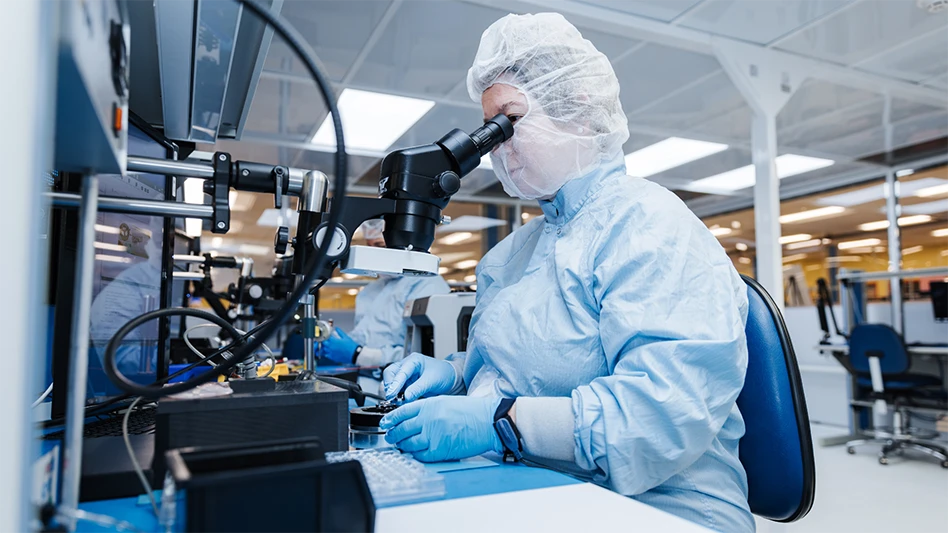
Medical contract manufacturers and OEMs are looking for converters to provide precision die-cutting, multi-layer laminating, and slitting to tight tolerances; cleanroom capabilities, including converting and packaging; access to medical grade adhesives; and testing capabilities
An experienced converter can select from servo-driven rotary die-cutting, CNC die-cutting, laser die-cutting, and waterjet die-cutting to meet the complex specifications of medical components. For example, a servo driven rotary die-cutter can maintain tight tolerances ranging from 0.015" to ±0.005" at speeds up to 500fpm, and is ideal for the complex, multi-layer die cutting, and lamination that a hydrocolloid dressing or drape might require.
For complex foam tape die-cutting, waterjet technology provides clean edges with no distortion. Laser die-cutting, kiss-cutting, slitting, and laminating can also function in converting for medical applications.
 Hydrocolloids can come as roll goods for converting and can include double-coated tapes, transfer adhesives, single-coated tapes with release liners, or additional materials for specialty devices. Hydrocolloids can come as roll goods for converting and can include double-coated tapes, transfer adhesives, single-coated tapes with release liners, or additional materials for specialty devices. |
A converter with a fully equipped test laboratory can ensure that customer materials meet designed-in specifications before they move to the factory floor, often eliminating the need to test materials at the customer’s facility. A complete test lab offers:
- Accurate and precise part dimen- sion measurement and verification
- Adhesive/release liner to determine converting properties and high speed application characteristics
- Material strength measured to ensure that material meets application requirements
- Static shear testing to measure the cohesive strength of the adhesive to withstand a fixed load over time
- Material weight measurement to determine adhesive coating weight
- Microscopic imaging to determine differences between adhesive and material over time
- Dielectric testing to determine a material’s electrical insulation properties
- Resistance and voltage testing to provide a complete profile of the electrical properties of an adhesive
Summary
New formulations in hydrocolloid adhesives are offering solutions to design engineers working on medical products with stick-to-skin friendliness, durable adhesion, fluid absorption, and antimicrobial properties. Working with a converter who has medical adhesive experience can help to select the adhesive and material that will best suit the application.
Fabrico
Kennesaw, GA
fabrico.com

Explore the January February 2012 Issue
Check out more from this issue and find your next story to read.
Latest from Today's Medical Developments
- Medtronic plans to expand interventional cardiology portfolio with CathWorks acquisition
- Nikon releases latest update to dimensional measurement software
- US cutting tool orders reach $206.1 million in November 2025
- Greenland is a vital link in the global supply chain
- What’s happening in the defense industry right now
- Hypertherm accepting applications for educational grant program
- Making workholding work for you
- Norman Noble offers medical implant engineering design services