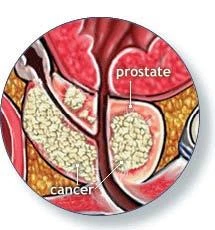
A new solution to destroyingmalignant tissue in prostatecancer without damaginghealthy tissue that surrounds itis being evaluated throughanimal studies. Testingwas highlightedby Roger J.McNichols, Ph.D.,a biomedicalengineer, in aspeech at theannual AmericanSociety for LaserMedicine andSurgery meeting.While therapy usestreatment of localized prostatecancer compatible withmagnetic resonance imaging(MRI) thermometry, thedifference is in use of specialcooling applicator device.

In combination they permitdelivery of high laser doses toaffected tissues and creation ofsafe lesions around them.As explained by Dr.McNichols, in experiments onfour animals a prototype laserdelivery catheter, 1.5 mm indiameter, was created to beused for cooling a diffusing tipfiber optic during interstitialprostate therapy. The coolingdevice was used with a 908 mmdiode laser to create lesions innormal and tumorbearingprostates under MRIguidance.The results werethat all of thecooled treatmentsproduced wellcircumscribedlesions free fromchar or tissuevaporization. Bycirculating coolingfluid around the fiber opticduring treatment, higher laserpowers (26 watts for up tofive minutes) could be safelydelivered than with diffusing tipfiber optic applicators alone.As research progresses, notesDr. McNichols, we are lookingto watercooled diffusing tipapplicators to increase thesafety of interstitial lasertherapy in the prostate and tomore precisely target tumorbearing cancer cells.
In combination they permitdelivery of high laser doses toaffected tissues and creation ofsafe lesions around them.As explained by Dr.McNichols, in experiments onfour animals a prototype laserdelivery catheter, 1.5 mm indiameter, was created to beused for cooling a diffusing tipfiber optic during interstitialprostate therapy. The coolingdevice was used with a 908 mmdiode laser to create lesions innormal and tumorbearingprostates under MRIguidance.The results werethat all of thecooled treatmentsproduced wellcircumscribedlesions free fromchar or tissuevaporization. Bycirculating coolingfluid around the fiber opticduring treatment, higher laserpowers (26 watts for up tofive minutes) could be safelydelivered than with diffusing tipfiber optic applicators alone.As research progresses, notesDr. McNichols, we are lookingto watercooled diffusing tipapplicators to increase thesafety of interstitial lasertherapy in the prostate and tomore precisely target tumorbearing cancer cells.

Explore the January 2005 Issue
Check out more from this issue and find your next story to read.
Latest from Today's Medical Developments
- NextDent 300 MultiJet printer delivers a “Coming of Age for Digital Dentistry” at Evolution Dental Solutions
- Get recognized for bringing manufacturing back to North America
- Adaptive Coolant Flow improves energy efficiency
- VOLTAS opens coworking space for medical device manufacturers
- MEMS accelerometer for medical implants, wearables
- The compact, complex capabilities of photochemical etching
- Moticont introduces compact, linear voice coil motor
- Manufacturing technology orders reach record high in December 2025