AdobeStock_129279852
New medical devices are being developed worldwide by countless companies in every possible category. Less common is the development of new medical procedures to treat the human body. Should devices and procedures be treated differently when it comes to the possibility of obtaining a patent? A patent provides its owner with the right to exclude others from making the device or practicing the procedure. Some countries are uncomfortable with the idea that a new medical procedure should require a patent owner’s permission to perform.
Comparing the US and European systems
In the United States, an inventor must satisfy three basic requirements to obtain a U.S. patent. Imagine a doctor develops a new process for implanting a vibratory hearing aid. Is her invention of a new method of placing it patentable? Her invention must be novel, non-obviousness, and fall into a category of patentable subject matter. These requirements are set out in Title 35 of the United States Code (USC). Section 101 of 35 USC broadly defines patentable subject matter as “any new and useful process, machine, manufacture, or composition of matter.” Historically, the term “process” has included medical procedures. However, judicial decisions have refined the scope of what constitutes patent-eligible subject matter, particularly for medical methods.

Carstens, Allen & Gourley via Grok
carstens@caglaw.com
Most European countries have joined the European Patent Convention (EPC) which is administered by the European Patent Office (EPO). The EPC applies to its 38 member states, including EU countries and others like Switzerland and Norway. Article 52 of the EPC defines patentable inventions similarly to the U.S., requiring novelty, inventive step, and industrial applicability. However, its Article 53(c) explicitly excludes “methods for treatment of the human or animal body by surgery or therapy and diagnostic methods practiced on the human or animal body” from patentability, with some exceptions. This restriction significantly differentiates Europe’s approach from the U.S.
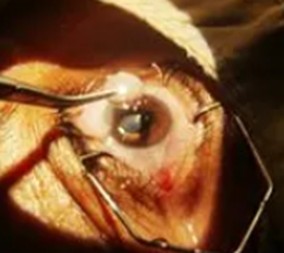
Medical procedures – defined as methods or processes for diagnosing, treating, or preventing medical conditions – are generally patentable if they also satisfy the requirements of novelty and non-obviousness. For example, a novel surgical technique or a new diagnostic method could be patented. Historically, the USPTO granted patents for medical procedures, such as surgical techniques or diagnostic assays. A notable case is Pallin v. Singer (1995), where a surgeon patented a cataract surgery technique, leading to controversy over enforcing patents against physicians. This case sparked ethical debates but did not result in a statutory ban on medical procedure patents.
Carstens, Allen & Gourley via Grok
carstens@caglaw.com
Instead, Congress passed 35 U.S.C. § 287(c) in 1997, which limits remedies for infringement of medical procedure patents. Under this provision, physicians and healthcare entities performing patented medical procedures are immune from infringement liability, provided the procedure does not involve a patented drug or device. This effectively renders medical procedure patents unenforceable against practitioners, though they remain valid and can be enforced against non-practitioners (e.g., device manufacturers).
Recent Supreme Court decisions, such as Mayo Collaborative Services v. Prometheus Laboratories, Inc. (2012) and Alice Corp. v. CLS Bank International (2014), have further restricted patent eligibility. In Mayo, the Court invalidated a patent on a diagnostic method for determining drug dosages, ruling it was an unpatentable law of nature. The Mayo/Alice framework requires that a method patent include an “inventive concept” beyond natural phenomena or abstract ideas. This has made it harder to patent diagnostic and treatment methods that rely on observing natural correlations, though innovative techniques with technical contributions (e.g., novel surgical methods) remain patentable. The U.S. approach reflects a balance between incentivizing innovation and addressing ethical concerns. While medical procedure patents are allowed, their practical enforceability is limited, and judicial scrutiny ensures that only sufficiently inventive methods qualify.

Carstens, Allen & Gourley via Grok
carstens@caglaw.com
The EPC’s Article 53(c) explicitly excludes methods of treatment by surgery, therapy, or diagnosis practiced on the human or animal body from patentability. The rationale is twofold: to ensure that healthcare professionals can practice medicine without fear of patent infringement and to address ethical concerns about restricting access to medical care. However, this exclusion is narrowly construed and does not apply to products (e.g., drugs, medical devices) or substances used in treatment, which are patentable. The EPO interprets Article 53(c) through decisions of its Boards of Appeal. In G 1/07 (Medi-Physics), the Enlarged Board of Appeal clarified that “surgery” includes any invasive procedure, even minimally invasive ones like injections, if they involve physical intervention on the body. Diagnostic methods are excluded if they involve steps practiced on the body to reach a diagnosis (e.g., taking samples or using imaging). However, methods performed outside the body, such as in vitro diagnostics or data analysis, may be patentable if they meet other EPC requirements.
An important exception is the “second medical use” patent, allowed under Article 54(4) and (5). If a substance or device is already known but discovered to have a new therapeutic use, a patent can cover that specific use (e.g., “use of compound X for treating disease Y”). This enables innovation in drug repurposing but does not extend to procedural methods like surgical techniques. The EPO’s strict exclusion of medical procedure patents reflects a policy prioritizing access to healthcare over proprietary rights in methods. This contrasts sharply with the U.S., where such patents are allowed but limited in enforcement.
Ethical issues
The U.S. approach to patenting medical procedures has sparked ethical debates. Proponents argue that patents incentivize innovation by rewarding inventors with exclusive rights, encouraging investment in new techniques. For example, developing a novel surgical method may require significant research, and patents can help recoup costs. However, patents also restrict access to care, as they could (in theory) allow patent holders to sue physicians or hospitals, raising costs or limiting treatment options.
Europe’s exclusion of medical procedure patents under Article 53(c) is rooted in ethical principles prioritizing patient access and professional autonomy. The EPO and European policymakers view medical methods as inherently tied to public health, arguing that patenting them could restrict access to essential care or discourage physicians from adopting new techniques due to legal risks. This stance aligns with Europe’s broader emphasis on universal healthcare and equitable access. However, critics argue that this exclusion stifles innovation in medical procedures. Without patent protection, inventors may lack the financial incentive to develop new techniques, especially if they cannot recoup R&D costs.
Conclusion
The U.S. and Europe take divergent approaches to patenting medical procedures, reflecting their legal, ethical, and healthcare priorities. The U.S. permits such patents but limits their enforcement, fostering innovation while protecting practitioners. Europe’s blanket exclusion prioritizes access and professional freedom but may deter investment in procedural advancements. Each system has trade-offs: the U.S. risks over-patenting and legal uncertainty, while Europe may under-incentivize certain innovations. Understanding these differences is crucial for stakeholders navigating the global medical innovation landscape.
Latest from Today's Medical Developments
- Gore completes acquisition of Conformal Medical
- Medical textiles designed for cardiovascular, orthopedic, dental prosthetic applications
- Micro-precision 3D printing: Trends and breakthroughs in medical device manufacturing
- One-component, dual-cure adhesive system for medical device assembly
- #82 Manufacturing Matters - Forecasting 2026 with GIE Media's Manufacturing Group
- Flexing prosthetic finger offers lifelike appearance and movement
- How the fast-evolving defense market impacts suppliers
- Medtronic’s Hugo robotic-assisted surgery system makes US debut