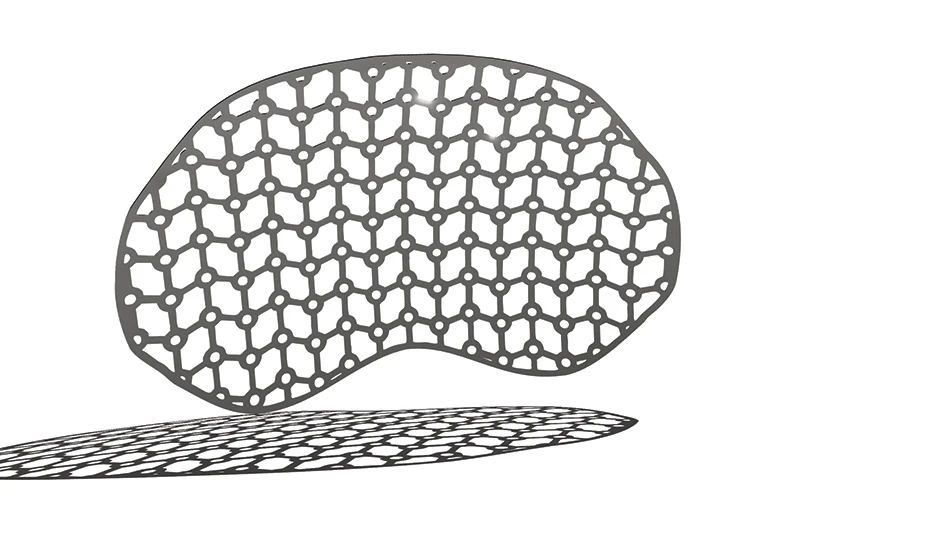
Officials at Cochlear Americas introduce the Cochlear Baha BIA400 series, featuring a unique abutment surface technology – a hydroxyapatite layer – that enables a tight adherence between the soft tissue and the abutment. This technology is designed to minimize the need for soft tissue removal and simplify the surgical procedure.
Important benefits for patients are that the surgical procedure becomes less invasive and the soft tissue disruption can be minimized. This new technology is designed to provide bone conduction patients with better aesthetic outcomes than with conventional percutaneous abutments. Leaving the soft tissue intact may also result in significantly shorter surgery time, faster healing and increase the likelihood of normal post-operative skin sensation around the implant site.
"As the first bone conduction implant company, we continue to innovate our solutions to better meet the needs of our recipients. We see the introduction of the BIA400 as a natural step in our continuous effort to improve the outcomes for our users," says Anthony Manna, president of Cochlear Bone Anchored Solutions.
The Cochlear Baha BA400 Abutment was recently cleared for use in the United States and Canada by the U.S. Food and Drug Administration (FDA) and Health Canada, respectively. The BIA400 series is currently being introduced to these markets through a controlled market release, and is expected to be widely available to clinicians in early 2013.
Latest from Today's Medical Developments
- Stryker’s flexible syndesmotic fixation device stabilizes ankle injuries
- Mergers & acquisitions news: MGS, Quantum Surgical bolster medtech portfolios
- Exchangeable-head solid carbide cutting tools
- NextDent 300 MultiJet printer delivers a “Coming of Age for Digital Dentistry” at Evolution Dental Solutions
- Get recognized for bringing manufacturing back to North America
- Adaptive Coolant Flow improves energy efficiency
- VOLTAS opens coworking space for medical device manufacturers
- MEMS accelerometer for medical implants, wearables