CREDIT: NORDSON EFD
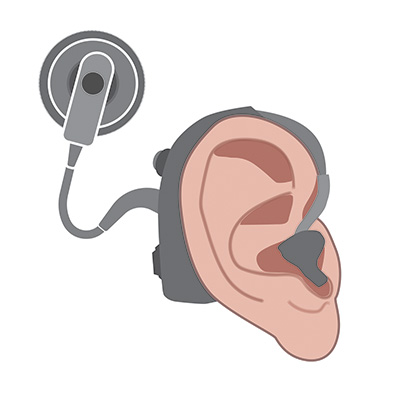
More than one million people worldwide have received cochlear implants as of July 2022, as reported by the National Institute on Deafness and Other Communication Disorders (NIDCD). Their research also found one in eight people in the United States (13%, or 30 million) ages 12 or older have hearing loss in both ears, based on standard hearing examinations. They assert roughly 28.8 million adults in our country could benefit from using hearing aids. Going forward, the World Report on Hearing from the World Health Organization projects by 2050 nearly 2.5 billion people will be living with some degree of hearing loss – and more than 700 million will require hearing rehabilitation.
In late 2022, the U.S Food and Drug Administration (FDA) took a giant leap to deregulate this market by allowing certain types of hearing aids to be sold over the counter (OTC). Furthermore, consumers could purchase hearing aids online or in stores without a medical examination or a fitting from a hearing specialist. This new subset of less expensive devices, in addition to standard hearing aids, has generated a renaissance in design and innovation for the hearing impaired, trending toward smaller, more comfortable wearables for patients. The technology landscape of hearing devices is evolving at great speed.
As one of the five senses, hearing loss can have a profound effect on a person’s quality of life. From listening to conversations between family and friends to enjoying live music to catching all the details in a work meeting, hearing has a major impact on many individuals’ lives. Hearing aids and cochlear implants can make a big difference in the quality of life for individuals using them daily, so it’s critical for these products to work correctly.
Hearing aid and cochlear implant components
While hearing aids amplify sounds to make them louder and clearer, cochlear implants can bypass damaged hair cells and directly stimulate the cochlea. Hearing aid components include a microphone, amplifier, and speaker. Cochlear implants include a microphone, speech processor, transmitting coil, receiver, and intracochlear electrode array. Both designs contain electronics working in tandem to improve hearing in patients.
The assembly of hearing aid parts is a critical production phase to ensure each unit functions properly. Maintaining high quality in the construction of cochlear implants mitigates the risk of multiple surgeries and exposure to bacteria which can damage the cochlea. When assembling these parts, manufacturers will use various fluids such as adhesives, sealants, fleece, getter material, primers/activators, and silicones. Micro fluid dispensing technologies play a special role in constructing high-quality hearing aids and cochlear implants.
Product requirements
Hearing aids and the external components of cochlear implants are intended to last roughly seven years. The design goal for the internal components of a cochlear implant is to last a lifetime. With this in mind, it’s incredibly important these components – especially the implanted parts – are durable, long lasting, and safe for patients.
The development of new hearing devices requires certain safety checks. The testing of these devices has to be performed in the same country where the parts are manufactured. FDA approval must be achieved before these products can enter the marketplace. To produce quality products, hearing aid manufacturers must determine and use a repeatable process to make each component as accurate as possible.
The best way to ensure a functioning end part is to begin with a highly accurate assembly process. For some hearing device manufacturers, manual processes such as using handheld dispensing devices are beneficial even when working with small parts. However, integrating precision fluid dispensing technologies into the production line of these devices has been game-changing in terms of supply chain. With cochlear implants, faulty or broken equipment can result in delayed surgeries if part inventory can’t be maintained.
Applying silicone to insulate electrode arrays
There is a vast array of fluid dispensing applications when it comes to accurately assembling hearing aid products. One involves insulating the electrode array inside a cochlear implant with silicone. This electrode array attaches to the internal receiver and is carefully threaded into the natural spiral of the cochlea. The external microphone takes in sounds and passes them through the speech processor identifying the different frequencies of sound. This current must travel along the array and the electricity must only escape through the stimulation channels at the ends of the array, where they sit within the cochlea. Different frequencies of sound will trigger certain stimulation channels. Ensuring the electricity passes through the electrode array from the receiver and no electricity is escaping is important for the device to work properly as well as avoiding any damage.
The fluid process engineers at Nordson EFD (East Providence, Rhode Island), a veteran player in the fluid dispensing technology arena, have been studying fluid viscosity for decades in their laboratories worldwide. Due to the viscous nature of this silicone, they tested and verified their high-pressure dispensing technology could accurately and consistently apply thick, viscous fluid. The ergonomic design of this device reduces hand fatigue, which is very important when manufacturers are assembling large numbers of these components, sometimes producing two for a single patient with hearing loss in both ears. These dispensing instruments can be paired with 32-gauge general purpose tips and attached to syringe barrels to prevent leakage and ensure drip-free dispensing which is critical for constructing very small parts.
Prepping implantable receivers with a getter material
The electronic components within the receiver on cochlear implants must be primed with a getter material to absorb any moisture inside before the part is sealed closed. Eliminating moisture inside the receiver helps prevent damage to the electrical parts and extends the life of the implant. Once the primer is applied, the mold can be sealed.
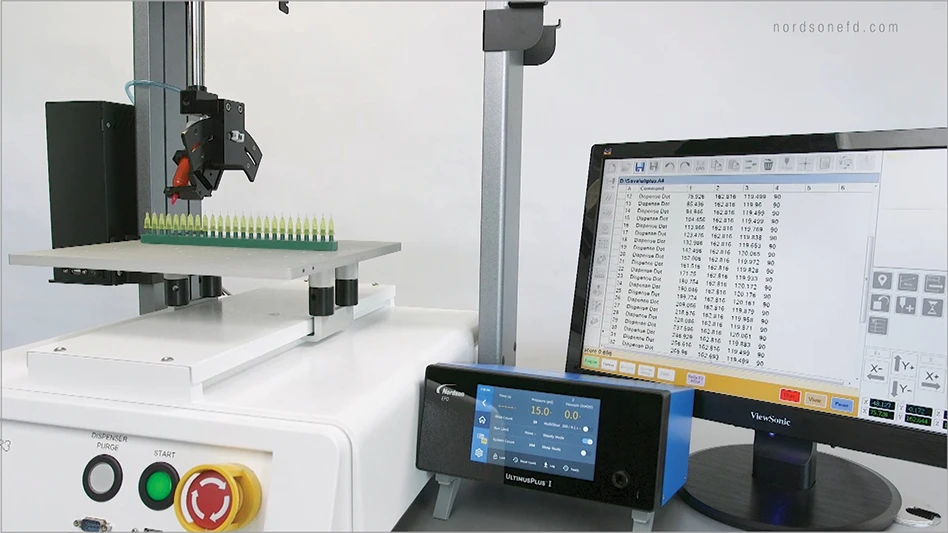
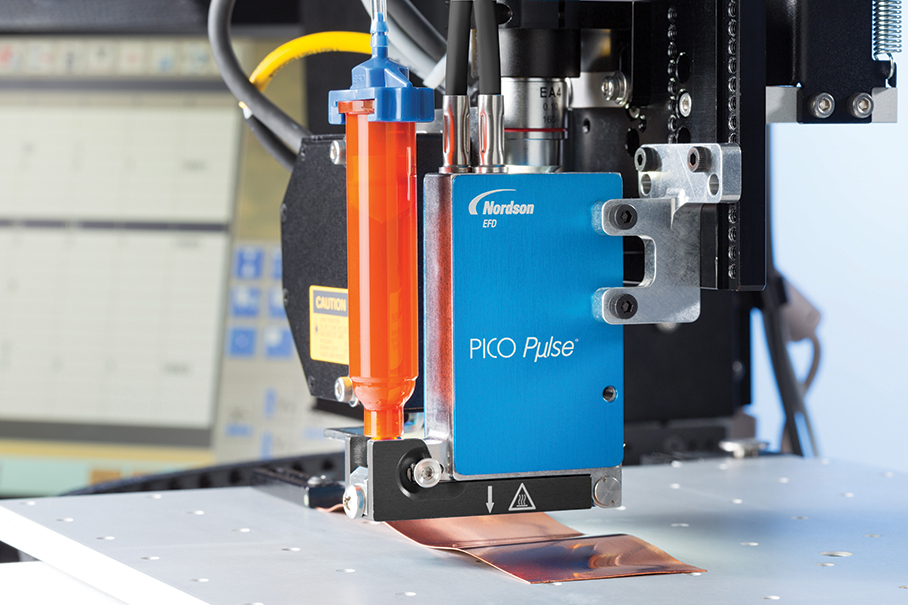
This process can be achieved with a non-contact jetting technology to apply precise, repeatable micro-deposits of fluids at high speeds, especially when dispensing on uneven or hard-to-reach surfaces or delicate parts. This fluid dispensing solution also enables next-level process control for getter material using manual or automated systems developed for Smart Factory integration. Nordson’s fluid dispensers can be paired with automated dispensing systems that are remotely accessible enabling the operator to monitor and control processes from a personal computer, programmable logic controller (PLC), or any plant controller using Transmission Control Protocol/Internet Protocol (TCP/IP).
What the future holds
As the population ages, hearing aid manufacturers face increased demand for hearing aids and cochlear implants. FDA approvals for implants now include children as young as nine months, which also puts more pressure on the marketplace. With properly functioning hearing aids, patients can regain their quality of life and engage with others in their world with greater normalcy.
Manufacturers are incorporating advanced assembly techniques into their production lines that leverage reliable fluid dispensing technologies. Manual and automated fluid-engineered processes help manufacturers ensure the electronics are protected, decrease the risk of the body rejecting an implant, and maintain the precision assembly of the device. As the market continues to grow, streamlined process control will contribute to the overall safety and quality of these hearing devices.

About the author: Mark O'Shea is the senior manager of business development at Nordson EFD. His career at Nordson EFD spans a dozen years, including roles in management and sales – including positions as an operations manager and site leader for an injection molding production facility and global product marketing manager for animal health-focused products.
Latest from Today's Medical Developments
- Gore completes acquisition of Conformal Medical
- Medical textiles designed for cardiovascular, orthopedic, dental prosthetic applications
- Micro-precision 3D printing: Trends and breakthroughs in medical device manufacturing
- One-component, dual-cure adhesive system for medical device assembly
- #82 Manufacturing Matters - Forecasting 2026 with GIE Media's Manufacturing Group
- Flexing prosthetic finger offers lifelike appearance and movement
- How the fast-evolving defense market impacts suppliers
- Medtronic’s Hugo robotic-assisted surgery system makes US debut