The trend for miniaturization and digitalization is shaping medical technology, too. Systems and components for treatment, diagnosis, and patient monitoring are becoming ever smaller and more powerful. In medical technology, field, safety, and reliability – despite progressive miniaturization – are an absolute priority, since reliable functioning can be vitally important.
With interconnection technologies, AT&S enables a wide variety of applications – some of them entirely new – both on and inside the human body. The company is one of the few printed circuit board (PCB) manufacturers that is certified to EN ISO 13485. Thanks to the performance and quality of its products, paired with extensive technical and consulting expertise in the medical sector, AT&S is contributing to making even smaller and more powerful products for medical treatment, monitoring vital functions (blood sugar, blood pressure, ECG) and diagnosis/imaging (MRT, X-ray, ultrasound). Extremely compact pacemakers with long battery life, hearing aids with intelligent adjustment, local neurostimulators for pain therapy, and cochlear implants allow improved and new treatment methods for patients.
The key challenges in medical technology are advancing miniaturization, maximum quality, and developing new biocompatible materials. For many years, AT&S has been a leading PCB supplier for hearing aids, and state-of-the-art cochlear implants also use AT&S technology.
Sign up for the weekly newsletter…know the latest in the medical design and manufacture market.
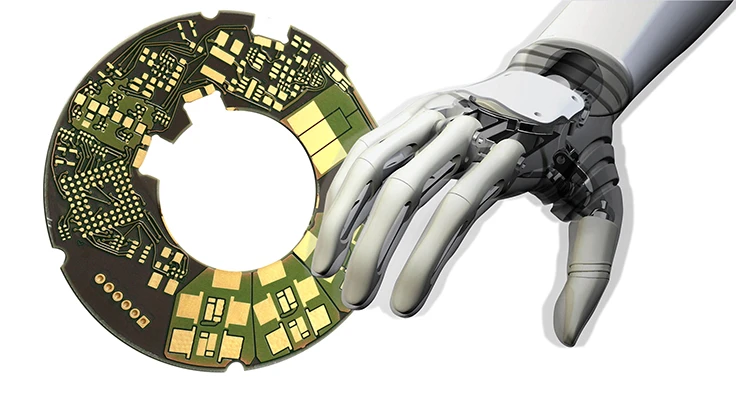
 Miniaturized PCBs are also facilitating completely new treatment approaches. For example, the functionality of a human hand – representing a highly complex system – has been largely replicated in a prosthesis using interconnection technology from AT&S. Smart capsules are now a reality too. Using highly miniaturized PCB technology as a substrate for the electronics, smart capsules can monitor specific body parameters and transmit the relevant data or deliver a controlled dose of medication. Finally, extremely compact interconnection technologies are also being used in wearables and tracking systems for lifestyle applications.
“Medical technology is facing great challenges with regard to demographic changes and the modern lifestyle,” says Walter Moser, chief sales officer (CSO) of the business unit automotive, industrial, and medical at AT&S. “With our advanced, constantly developing interconnection technologies and our consulting expertise, we are ideally positioned to help our customers find solutions to these current problems. That includes new cost-efficient, patient-friendly treatments and diagnostic procedures, as well as user-optimized monitoring solutions.”
Latest from Today's Medical Developments
- Exchangeable-head solid carbide cutting tools
- NextDent 300 MultiJet printer delivers a “Coming of Age for Digital Dentistry” at Evolution Dental Solutions
- Get recognized for bringing manufacturing back to North America
- Adaptive Coolant Flow improves energy efficiency
- VOLTAS opens coworking space for medical device manufacturers
- MEMS accelerometer for medical implants, wearables
- The compact, complex capabilities of photochemical etching
- Moticont introduces compact, linear voice coil motor