GIE Media's Manufacturing Group
Thursday September 19 9:00 AM CST
IMTS53 Room W192-B
Learn about the presentation
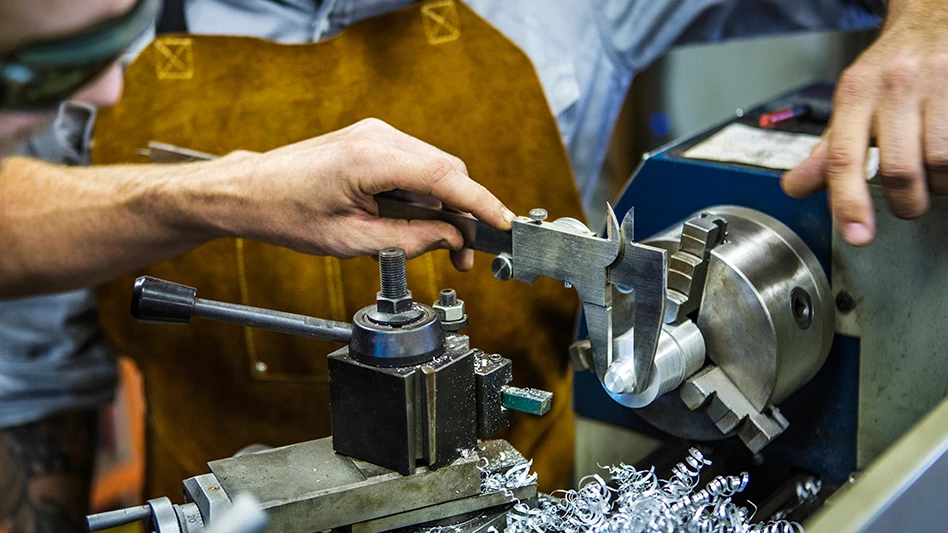
Elaborating on traditional methods: Single-point threading involves cutting threads one at a time using a single-point tool, requiring multiple passes to achieve the desired profile. Tapping, on the other hand, involves the use of a tap to cut threads into pre-drilled holes, which can be time-consuming and prone to tool wear. Thread milling utilizes a rotating cutter to produce threads, but it may struggle with intricate profiles and limited accuracy.
In contrast, whirling technology stands out for its ability to tackle complex thread profiles with unmatched precision and efficiency in a single operation. By utilizing multiple cutting inserts simultaneously, whirling machines can achieve superior results in less time, making them ideal for a wide range of applications across industries.
Conclusion: As manufacturing processes evolve, whirling technology emerges as a cornerstone of innovation, offering unparalleled precision and efficiency in thread and profile machining. By surpassing the limitations of traditional methods, whirling technology empowers manufacturers to stay ahead in today's competitive landscape. Embracing this transformative technology promises to unlock new levels of productivity and quality in modern manufacturing.
Latest from Today's Medical Developments
- NextDent 300 MultiJet printer delivers a “Coming of Age for Digital Dentistry” at Evolution Dental Solutions
- Get recognized for bringing manufacturing back to North America
- Adaptive Coolant Flow improves energy efficiency
- VOLTAS opens coworking space for medical device manufacturers
- MEMS accelerometer for medical implants, wearables
- The compact, complex capabilities of photochemical etching
- Moticont introduces compact, linear voice coil motor
- Manufacturing technology orders reach record high in December 2025