The 3D Printer Manufacturing industry has leaped ahead in recent years, driven by rapid technological developments, falling costs, and new applications for 3D printing technology. Over the five years to 2011, revenue is expected to grow at an average annualized rate of 7.1% to total $1.4 billion. Because of the rapid increase in revenue and the importance of 3D printers to a number of key industrial sectors, IBISWorld has added the 3D Printer Manufacturing industry research report to its library of more than 700 industry reports.
The 3D Printer Manufacturing industry has surged ahead in recent years, driven by rapid technological developments, falling costs, and new applications for 3D printing technology. Over the five years to 2011, revenue is expected to grow at an average annualized rate of 7.1% to total $1.4 billion. Industry revenue decreased 9.8% in 2009 due to recession-related declines in demand, though it bounced back in 2010, as downstream markets recovered. Revenue is expected to grow 20.8% from 2010 to 2011.
3D printers have been increasingly used in medical device manufacturing. 3D printers are used to create customized medical devices and medical devices that more accurately replicate the human form. These products include hearing aids, orthopedics, dental implants as well as future applications such as 3D-printed organs and blood vessels. Historically, architecture, design, engineering and construction industries have had to create models by hand or using older subtractive manufacturing techniques. 3D printers are capable of converting designs to near instantaneous 3D models; correspondingly, they have grown in popularity within this field. Aerospace manufacturers comprise another market that has the potential for strong future growth for 3D printer manufacturers. The aircraft industry's continual desire to reduce the weight of their aircraft (for fuel-efficiency reasons) will drive future demand for 3D-printed products.
The price for most commercial 3D printers typically begins at about $15,000 and quickly rises upward, which is out of the price range of the average consumer. However, a number of enterprising startups (in addition to commercial 3D printer manufacturers) have focused on developing lower-cost 3D printers for home use, making it more attainable for the average consumer. Over the five years to 2016, industry demand and revenue are forecast to surge forward as 3D printers explode in popularity and more customers from a wide array of industries join the 3D printing revolution. From 2011 to 2016, IBISWorld forecasts that industry revenue will grow at an average annualized rate in low double digits.
In 2011, the largest four industry participants will collectively control less than 35.0% of industry revenue. This low concentration reflects the fact that this industry is still in its infancy; though certain manufacturers have carved out niches in certain markets, there is still plenty of opportunity for new entrants and up-and-comers. In the five years to 2011, IBISWorld estimates that enterprise numbers will grow by 6.4% per year while establishment numbers will rise by 4.4% yearly. Industry major players are 3D Systems Corporation, Stratasys Inc and Z Corporation.
For more information visit IBISWorld's 3D Printer Manufacturing industry report.
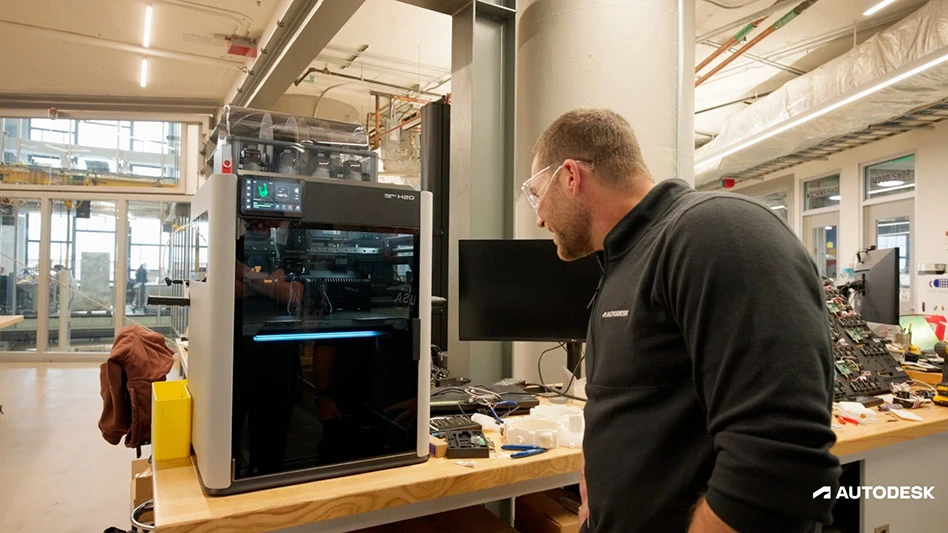
This industry manufactures 3D printers. 3D printing is a form of additive manufacturing technology where a three-dimensional object is created by laying down successive layers of material. 3D printers offer product developers the ability to print parts and assemblies made of several materials with different mechanical and physical properties in a single build process.
3D Printer Manufacturing Industry Report Key Topics
- Industry Performance
- Executive Summary
- Key External Drivers
- Current Performance
- Industry Outlook
- Industry Life Cycle
- Products & Markets
- Supply Chain
- Products & Services
- Major Markets
- Globalization & Trade
- Business Locations
- Competitive Landscape
- Market Share Concentration
- Key Success Factors
- Cost Structure Benchmarks
- Barriers to Entry
- Major Companies
- Operating Conditions
- Capital Intensity
- Key Statistics
- Industry Data
- Annual Change
- Key Ratios
Latest from Today's Medical Developments
- Exchangeable-head solid carbide cutting tools
- NextDent 300 MultiJet printer delivers a “Coming of Age for Digital Dentistry” at Evolution Dental Solutions
- Get recognized for bringing manufacturing back to North America
- Adaptive Coolant Flow improves energy efficiency
- VOLTAS opens coworking space for medical device manufacturers
- MEMS accelerometer for medical implants, wearables
- The compact, complex capabilities of photochemical etching
- Moticont introduces compact, linear voice coil motor