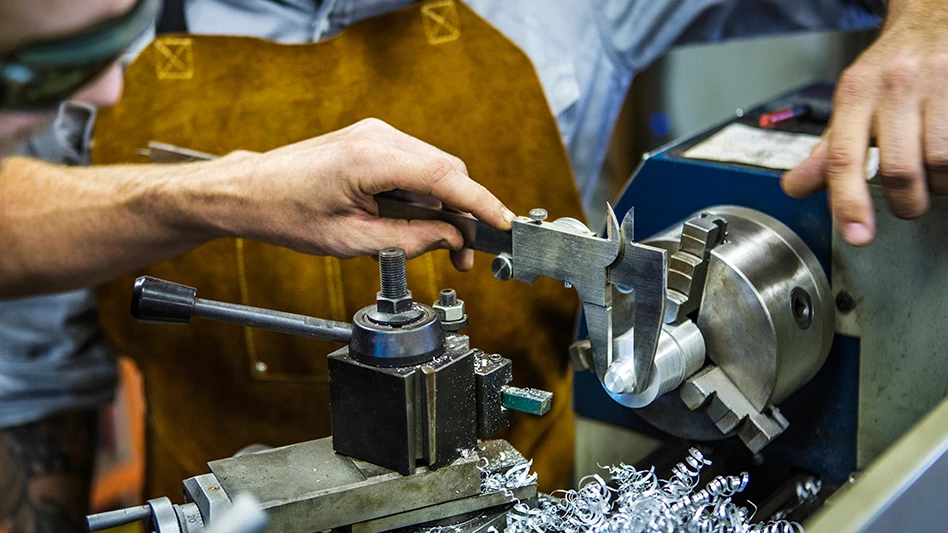
Abbott Ball Company has produced new literature describing a range of medical applications for its Nitinol 60 material and processes. In the more than 50 years since its discovery, there has previously been very little success in commercializing Nitinol 60. In spite of its superior characteristics, the material was effectively abandoned in the late 1950s, when difficulties in machining and work-hardening were encountered.
Nitinol 60, an inter-metallic alloy containing 60% nickel and 40% titanium, is inherently hard, wear resistant, non-magnetic, corrosion proof, biocompatible and weighs less than most competing alloys. Its super-fine grain structure permits tight tolerances and fine edges. Lower friction, reduced weight and hardness to 62 RC ensure longer life and reduced wear. Nitinol 60 flexs up to 5%, which permits prostheses to “give” more naturally without losing their original shape. A material with these characteristics literally revolutionizes many aspects of design, engineering and manufacture of medical devices like hip joints, sharp surgical instruments and other products that would benefit from these improved characteristics.
Abbott Ball Company has manufactured high quality products in the United States for more than 100 years. Our engineers look forward to working with customers on the 21st century medical opportunities that Nitinol 60 presents.
Latest from Today's Medical Developments
- Stryker’s flexible syndesmotic fixation device stabilizes ankle injuries
- Mergers & acquisitions news: MGS, Quantum Surgical bolster medtech portfolios
- Exchangeable-head solid carbide cutting tools
- NextDent 300 MultiJet printer delivers a “Coming of Age for Digital Dentistry” at Evolution Dental Solutions
- Get recognized for bringing manufacturing back to North America
- Adaptive Coolant Flow improves energy efficiency
- VOLTAS opens coworking space for medical device manufacturers
- MEMS accelerometer for medical implants, wearables