A look at milling and turning expertise, as viewed by ARC Advisory Group.
It is fair to say that while the medical community lives by the Hippocratic Oath, the overall healthcare system focuses largely on profitability. The healthcare industry today operates on a for-profit basis. To complicate matters further, many decisions in medical treatment are unique in each region of the world simply because of the basic differences in the way hospitals and other medical providers are reimbursed. The doctor's approval is only one component of the medical services selling process. The healthcare insurance provider - whether government-sponsored or private -must also approve the procedure and associated equipment.
To help keep medical equipment and supply costs down while maintaining adequate profit margins, the medical device industry has reached out to automation suppliers to improve productivity in the manufacture of medical devices. This is especially true for orthopedic devices. The medical device market identified machine tool technology -- once associated with the automotive, aerospace, and tool & die industries -- as critical for achieving productivity improvements and the high degree of precision often required. DMG, a leading machine tool builder in milling and turning, combined its expertise in machine tool design with Siemens Drive Technologies automation expertise to improve productivity in knee, hip, and dental component manufacturing.
Healthcare Adopts Technology
The 21st Century has created the perfect storm for adoption of machine tool technology in medical device manufacturing applications. A tremendous shift in demographics to an aging population, a new generation of medical professionals willing to accept computer technology, and a healthcare industry seeking greater efficiency all open the door for automation in the medical community. The medical community seeks to close the gap between the sophisticated preoperative environments and bring automation to the operating arena. However, there is a digital divide between the operating room, surgical planning, and manufacturing of replacement joints and dental devices ("spare parts" for humans).
The gap is closing, but the missing link in the transformation of the surgical environment is the use of machine tool technology fully integrated with the preoperative computer-aided software. This integration will lead to a generation of medical devices resulting in: 1) improved clinical results for the patient, and 2) reduced time in the operating room. These are imperatives before the industry alters traditional manufacturing of spare parts for humans. Technology alone will not suffice; the medical community is not interested in automation for automation's sake, but rather, keenly interested in capital investments that have a measurable return on investment (ROI).
Aerospace Expertise Brought to the Medical Device Market
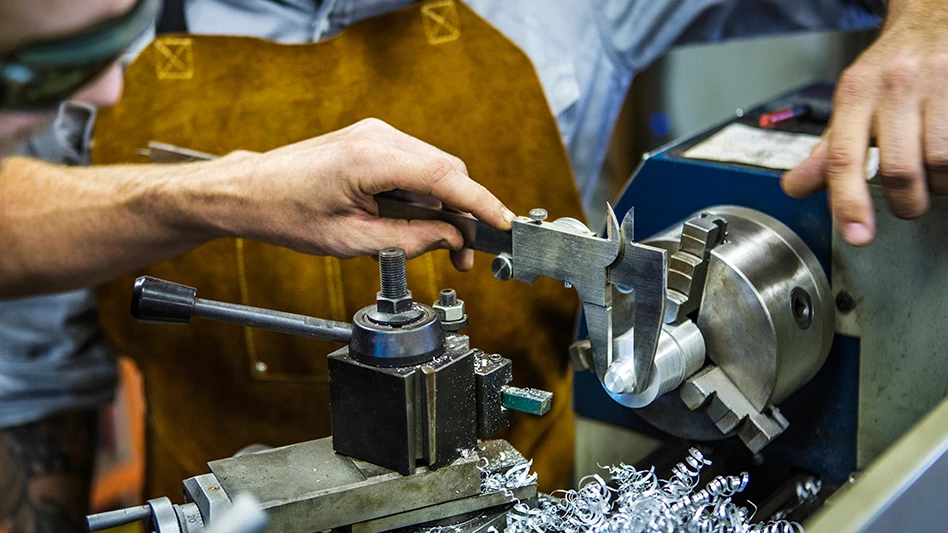
Durability is one of the most important aspects of a replacement joint. Consequently, the medical industry seeks out materials that combine corrosion resistance with a very high strength-to-weight ratio. The aerospace industry seeks out the same characteristics in materials, specifically for components used in the landing gear and other structural elements. To this end, titanium, a widely used material in aerospace, is being applied in joint mechanisms for both knee and hip replacements. Titanium, however, is one of the most difficult materials to machine in milling or turning applications. Machining titanium requires a tremendous amount of expertise and knowledge of the setup of machine parameters along with appropriate tooling to create a part that requires minimal hand polishing and finishing.
Both Siemens Drive Technologies (DT) and DMG have developed a considerable amount of expertise contouring titanium specifically in five-axis milling applications as a result of their strong penetration in the aerospace industry. The use of five-axis machine tools in medical device manufacturing offers significant advantages by improving productivity, surface quality, and overall machining accuracy. Demand for five-axis machines grew significantly over the last 10 years as machine tools users realize that the entire work piece can be finished in one setup operation, rather than using multiple machines or multiple fixtures for work piece setup. The combination of productivity and surface finish quality created demand for five-axis geometries in machine tools.
The partnership between Siemens DT and DMG creates synergy in which each company benefits from its combined knowledge in the machine tool industry and high-production automation environments. A good example is the development of special options on the Siemens CNC system specified by DMG. These are critical to improving the performance of the machine tool for the medical device applications, giving DMG an advantage over its competitors. Siemens DT provides the engineering resources to integrate DMG requirements directly into the CNC system providing DMG with a tightly integrated, highly optimized solution. DMG in turn allows Siemens to offer these features after two years have expired, effectively contributing these capabilities to the rest of the machine tool market. However, over those two years, DMG will have continued to develop innovations, allowing it to remain well ahead of the competition in the machine tool business.
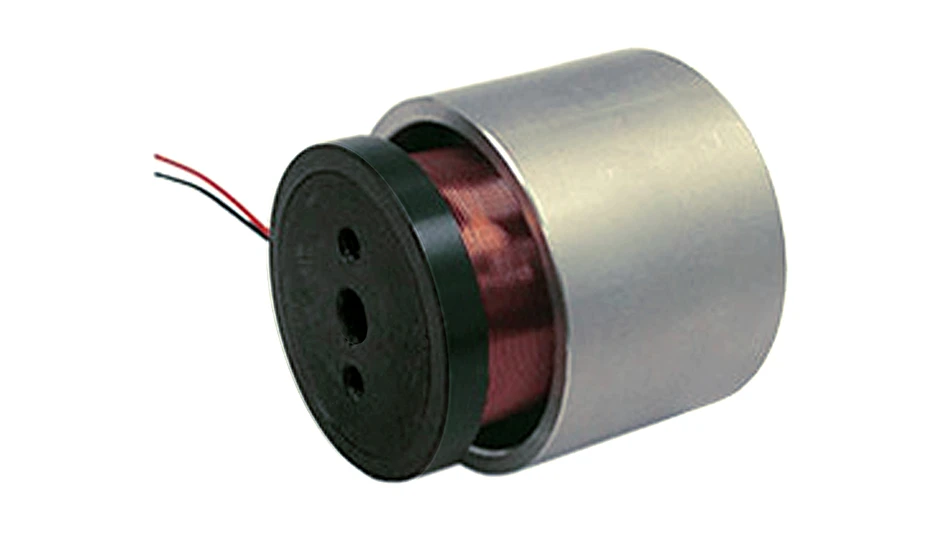
A good example of this technology partnership has been the adoption of linear motors used in DMG's high-speed, high-accuracy machine tools. The benefit of linear motors in machine tools is well recognized, but there are often many challenges when trying to commercialize linear motor technology. This is where the value of using a partner that has provided all elements required in the control solution is invaluable. In this instance, Siemens provides the linear motors, servo drives, and CNC system, which all require technology development to ensure optimal integration of the linear motor into the machine tool. In these cases, optimization ensures that the performance goals are achieved, form factor issues are resolved, and total lifecycle costs are minimized.
While improvements in the machine tool performance lay the foundation for productivity increases in medical device manufacturing, the addition of auxiliary automation is another enabler. Robotic handling systems, intelligent fixtures, and automated tool handling systems are essential to achieving production efficiencies on par, for example, with the automotive industry. As medical device manufacturers continue to purchase more advanced machine tools, these systems must be extensible and adaptable such that automation can be integrated. Siemens DT automation integrates with third-party automation equipment through standard networking interfaces such as ProfiNet. The critical point is that a machine tool is only one piece of the total automation productivity solution. Due to the large capital investments involved, the underlying automation system must support the addition of future automation equipment.
Partnership Embraces Entire Value Chain
Over time, the DMG/Siemens partnership will help close the digital divide in medical device manufacturing. Looking deeper into the Siemens organization, the capabilities of Siemens PLM provides a comprehensive environment. This includes product data management and computer aided design for the digital design of the replacement joints. These are the same product development tools that DMG, as a machine tool builder, uses to design the machinery for its customers. Medical device manufacturers will leverage the ability to simulate with precision the entire machining process using virtual design tools prior to cutting metal. The old adage "measure twice, cut once," applies in this application as well. "Simulate twice and cut once," will become the norm. Thus, the entire value chain from product design through product manufacturing will be radically improved.
To purchase this report, or obtain information about how to become a client, please contact info@arcweb.com.
By Sal Spada and David Humphrey, ARC Advisorty Group
Latest from Today's Medical Developments
- Stryker’s flexible syndesmotic fixation device stabilizes ankle injuries
- Mergers & acquisitions news: MGS, Quantum Surgical bolster medtech portfolios
- Exchangeable-head solid carbide cutting tools
- NextDent 300 MultiJet printer delivers a “Coming of Age for Digital Dentistry” at Evolution Dental Solutions
- Get recognized for bringing manufacturing back to North America
- Adaptive Coolant Flow improves energy efficiency
- VOLTAS opens coworking space for medical device manufacturers
- MEMS accelerometer for medical implants, wearables