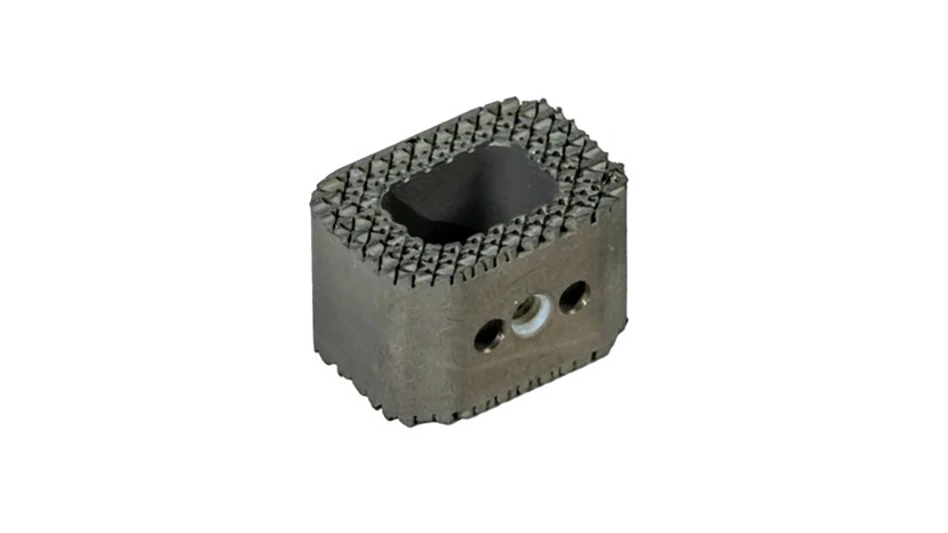
Dublin, Ireland – Titanium is a key metal and alloy component in the manufacturing scene. It is a tough, low density, high strength metal that possesses good heat transfer characteristics. It is twice as strong as aluminum, 45% lighter than steel, and does not become magnetized. These properties, as well as its high melting point and corrosion resistance make it an important metal across the industrial manufacturing landscape. Its bio-compatibility also makes it ideal for medical device applications.
Adhesive bonding has facilitated the joining of dissimilar materials, led to weight reduction and promoted cost effective assembly of multi-component parts (reduction in part count and assembly time) in the aerospace, automotive, and other sectors. These are some of the unique advantages adhesives offer for structural, semi-structural, and non-structural applications in these industries. The use of structural adhesives has seen a gradual but steady increase during the years as designers and engineers seek increased performance, flexibility in design, more efficient production, and ultimately a greener footprint.
The road to optimizing bond strength starts with proper surface preparation of adherents. Typical methods include:
- Abrasion: To increase the surface area of bonding often via wire brushing, sand blasting or use of sand paper
- Chemical: Changing the physical/chemical properties of the surface via chemical etching to improve adhesion. A process that has come under more environmental regulatory spotlight due to hazardous chemical involved
- Degreasing: To remove any dirt or contaminants from the surface usually with the aid of solvents
- Physical: Modification of the surface via common methods like plasma treatment, corona discharge or flame treatment
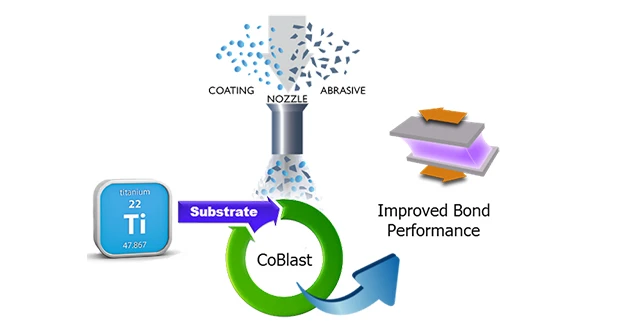
CoBlast is a one-step, ambient temperature, ambient pressure, solvent free process that involves the simultaneous blasting of abrasive and coating powders (dopant) onto a metal surface from a single nozzle. The abrasive mechanically abrades the substrate, exposing active chemical bond to which the coating particles bond before an oxide layer can reform. It enables the removal of surface contaminants and weak boundary layer such as weak oxide layers in a more environmentally friendly manner than current pre-treatment methods.
Careful selection of abrasive and process parameters allows the adherent surface roughness to be adjusted. The wetting characteristics of the adherent can also be maximized by tailoring the dopant chemistry to the intended application.
CoBlast surface pre-treatment can be tailored to desired results of increased surface energy and wettability, greater surface area, and ultimately a clean surface set for improved bond strength. The general principle of a contaminant-free surface leading to improved bond performance is as true for wooden substrates as it is for the high tech carbon fiber laminates. Titanium-titanium and titanium-carbon fiber reinforced plastic (CFRP) joints with CoBlast pre-treatment have shown improved bonding performance with CoBlast pre-treatment compared to other wet and/or high temperature surface pre-treatment processes.
Source: ENBIO
Latest from Today's Medical Developments
- Gore completes acquisition of Conformal Medical
- Medical textiles designed for cardiovascular, orthopedic, dental prosthetic applications
- Micro-precision 3D printing: Trends and breakthroughs in medical device manufacturing
- One-component, dual-cure adhesive system for medical device assembly
- #82 Manufacturing Matters - Forecasting 2026 with GIE Media's Manufacturing Group
- Flexing prosthetic finger offers lifelike appearance and movement
- How the fast-evolving defense market impacts suppliers
- Medtronic’s Hugo robotic-assisted surgery system makes US debut