CREDIT: BOSTON MICRO FABRICATION
As a dependable and innovative technology solution, micro-precision 3D printing continues to push new boundaries across the prototyping and production process for an array of medtech applications. In this interview, John Kawola, Chief Executive Officer at Boston Micro Fabrication (BMF), gives his take on the current trends and application breakthroughs that continue to make the technology a viable go-to solution for manufacturers’ demanding and specialist application needs.
Please give a brief overview of Boston Micro Fabrication and what your company does.
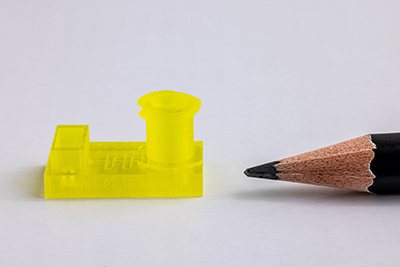
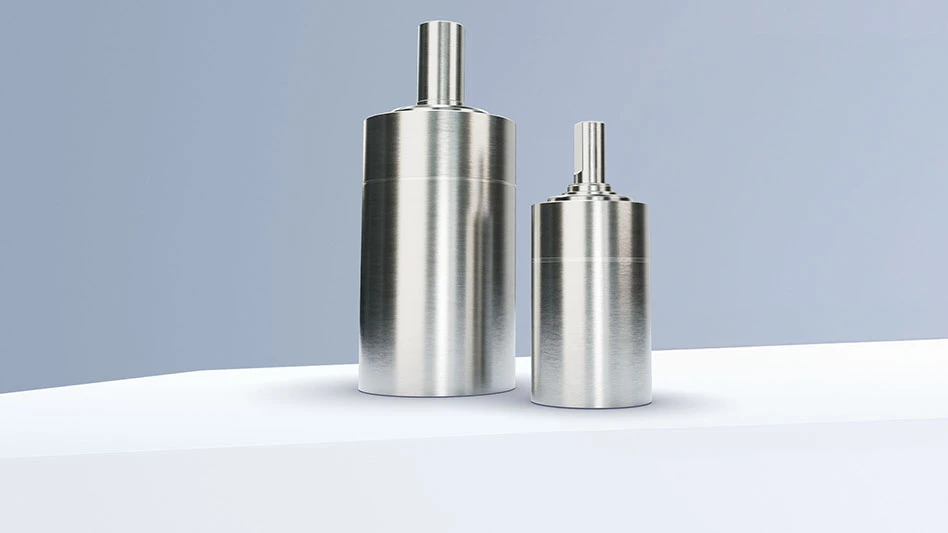
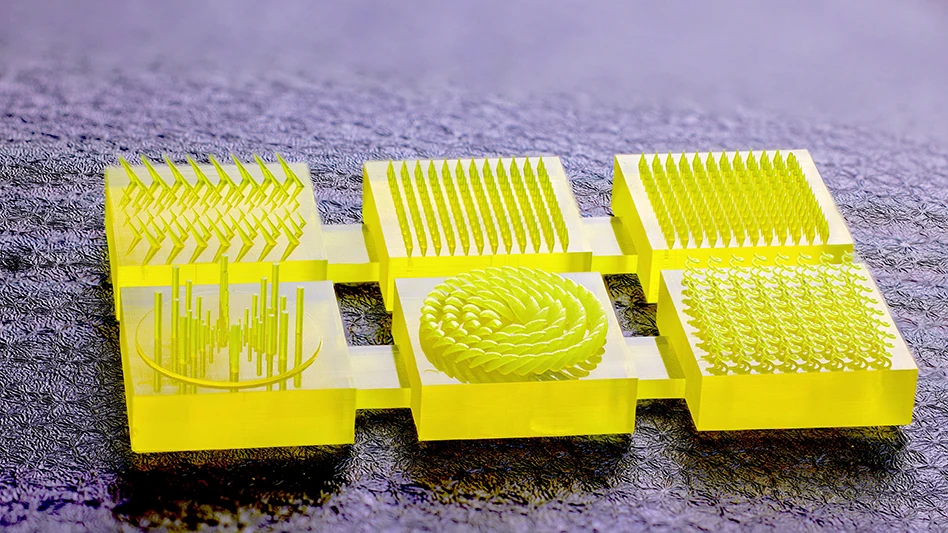
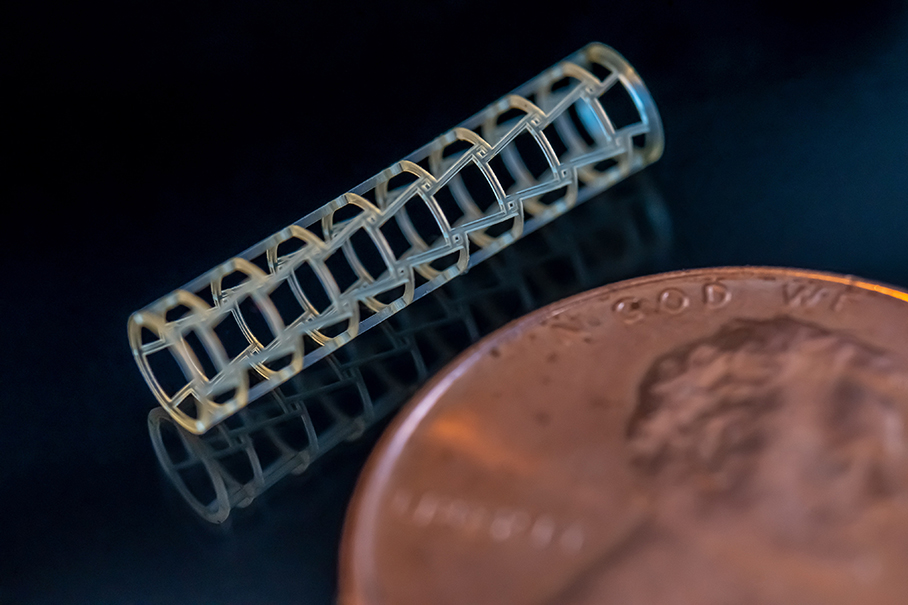
We’re global leaders in micro-precision 3D printing, delivering advanced manufacturing solutions for applications that demand micron-level resolution, accuracy, and precision. The medtech sector is a primary focus area for us and there are a multitude of medical device applications that demonstrate the efficiency attributes of our highly precise 3D printing technology as an optimal manufacturing process. These include microfluidic components such as fluid connectors and valves for gene sequencing, as well as endoscopes, cardiovascular stents, and blood heat exchangers. Additionally, microneedles are transforming the future of transdermal drug delivery, diagnostics, and biosensing so precision is paramount in this scenario.
Our overall aim is to empower customers with complete design freedom to create geometries that cannot be manufactured in any other way. The combination of ultra-high resolution, accuracy, and precision allows for more intricate, exact, and replicable parts at scale and tolerances that match those of micro injection molded parts. Indeed, we’re the only industrial 3D printing company to match the quality of high-resolution injection molding and CNC processing.
With technology constantly advancing innovation in medtech, are there any particularly interesting trends that you’re seeing, or perhaps even helping to drive directly?
There’s definitely an ongoing trend for miniaturization and personalization capabilities that’s being supported by constant technological development, which in turn is expanding the applications gamut. Our own proposition, which is focused on projection micro stereolithography 3D printing technology, continues to see us advance things like implant technologies and drug delivery solutions, for which miniaturization is extremely useful. But generally, this requirement is a common focus for many of our customers within medtech for things like medical devices, and indeed is something we’re also seeing elsewhere across electronics, as well as optics and photonics.
In terms of personalization, we’re seeing many examples of how 3D printing is enabling the production of devices that are customized to fit the exact needs of individuals, including in orthopedic implants for a patient’s knee or hip, as well as in the field of prosthetics.
Similarly, within dental the continued drive around digital dentistry is geared toward fast and cost-effective production of personalized appliances. Be it mouth guards, crowns or bridges, or surgical guides to name just a few, dental sector applications are perfectly suited to 3D printing, so it’s definitely a win over mass manufacturing in this instance.
Are there any current developments or projects you’re hoping will address on an ongoing challenge or need?
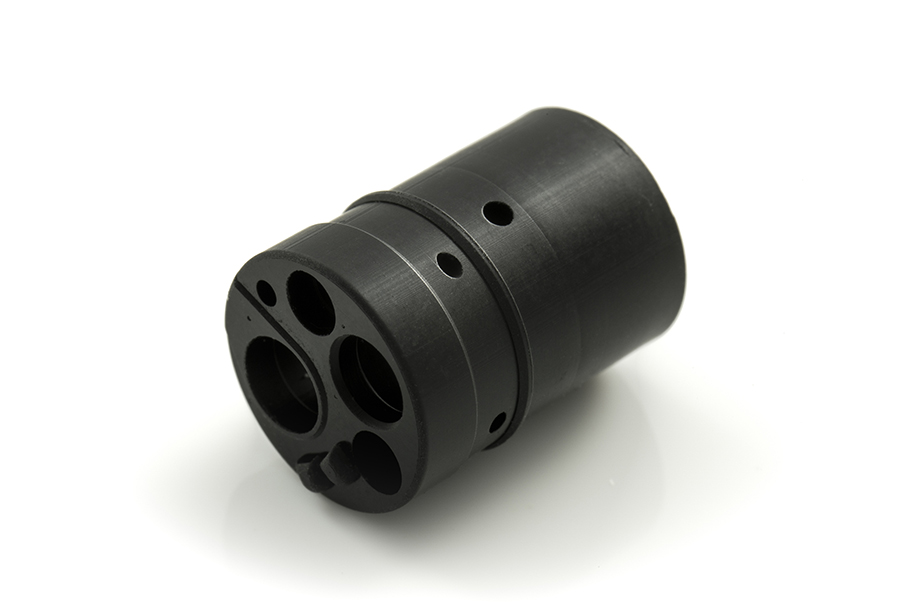
One interesting project that exemplifies the capability for miniaturization is with our medical device customer, RNDR Medical, which has developed an innovative single use ureteroscope for endourology. A key component of this is the distal tip, which houses the camera chip and illumination source. These elements needed to be contained and sealed within the distal tip with a high degree of precision, all within a .130" diameter profile. Accommodating all these design elements within such a small profile required a component with complex 3D geometry, tight tolerances, and wall thickness traditionally only achievable through niche micro molding.
In terms of measurable results, RNDR Medical credits our microscale 3D printing technology with cutting development time by as much as half, citing that their medical device engineers were able to evaluate and iterate designs in a matter of days and weeks as opposed to months.
Also, within the dental space we have an ongoing project focused on cosmetic veneers called UltraThineer, which is designed to correct imperfections like tooth discoloration or structural issues. Unlike traditional options that are very thick and require the dentist to grind down a patient’s teeth and remove good enamel, UltraThineers are still extremely strong but are 3x thinner, with widths under 100µm. In fact, they are actually the world’s thinnest, no-prep 3D-printed dental veneer and another example of something that can only be made with 3D printing technology.

Are there any particular challenges when it comes to genuine wide-scale deployment of the application opportunities within this space?
I think it sometimes takes a big disruption within our lives to get people moving, and a very good example is drug delivery; as a world, we all discovered that immunizing billions of people with the needle and the vial doesn't scale very well. There has been lots of development and research focused on drug delivery or crucial immunization through microneedles or patches. Indeed, the latter have been used for things like curbing nicotine addiction, but what we haven’t scaled yet is how such technology could be used as drug delivery for immunization.
I think some of the events in the recent past have made us think about how we leverage digital manufacturing and advanced materials to go faster and scale things up versus going to a drugstore for immunization with a needle and a vial. But it’s not easy and there are a multitude of considerations, including logistical and supply chain factors. How do you deliver all these patches? How do you make sure the right people are taking them? How do you ensure people don't exceed the dosage?
So whether it's the material science or the actual logistics of how to deliver these devices, I think the whole process is being more closely looked at compared to a few years ago.
Is there any advice you would offer medical device companies that might be looking at manufacturing options for a particular product or application?
Education is key. It sounds simple, but it’s really about establishing the application need and then assessing the technology options available to effectively meet that requirement. There’s a multitude of applications for which 3D printing significantly accelerates go-to-market times if you have to create tens, thousands, or even hundreds of thousands of a part or product. And of course, its fundamental attributes enable faster scale-up; there’s no need to worry about complex tooling – and the associated high costs and lead times – and assembly or production setup, which also supports a distributed manufacturing model much more easily.
That said, there’s a host of different 3D printing technologies, not all of which are suited to all applications. Some systems cannot produce small parts with tight tolerances at the required resolution. Fused deposition modelling, for example, is limited to low-precision parts that have rough surfaces. Meanwhile, two-photon polymerization-based direct laser writing can produce small parts in ultra-high precision, but it’s a slow process for an industry that wants to speed product assembly. So again, it comes back to researching the technology to align with your specific need.
However, insofar as digital technologies, the economics for certain applications probably still don't make sense if the volume demands are very high – say 100 million or so.
Ultimately, there’s a lot of existing technologies that continue to rapidly evolve, and the pace of change we’re seeing in areas like materials science is staggering. This is really exciting and offers huge scope for manufacturers in this space when it comes to addressing their exacting requirements today and those of tomorrow.
Latest from Today's Medical Developments
- One-component, dual-cure adhesive system for medical device assembly
- Flexing prosthetic finger offers lifelike appearance and movement
- How the fast-evolving defense market impacts suppliers
- Medtronic’s Hugo robotic-assisted surgery system makes US debut
- TMTS 2026 launches digital treasure hunt
- Boost your productivity with the latest workholding technology
- Improving children’s access to high-performance prosthetic devices
- Tool balancing system for speed, reliability