CREDIT: METACARPAL
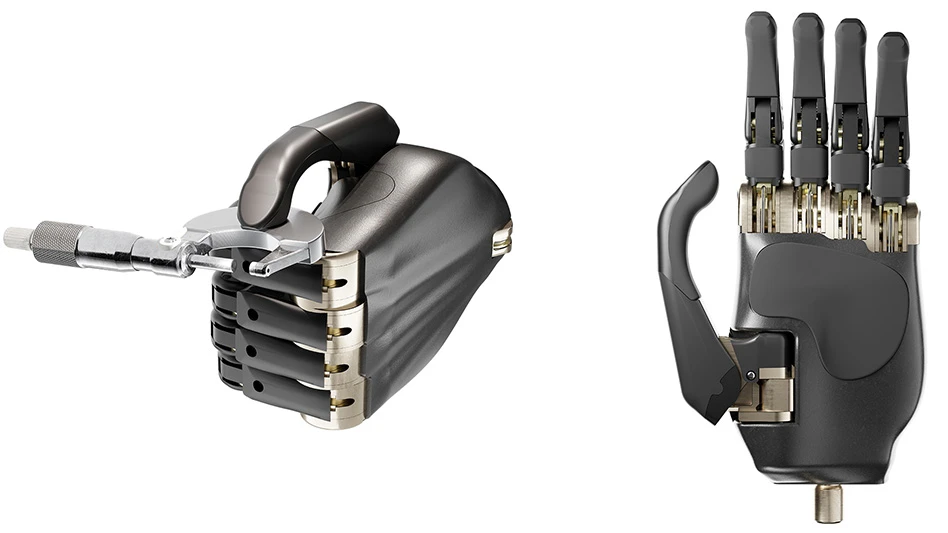
Metacarpal, a medical device manufacturer specializing in body-powered upper-limb prosthetics, announces its Metacarpal GEM prosthetic hand is now available to American amputees.
The Metacarpal GEM tackles prosthetic abandonment that affects nearly half of all users. Research shows comfort issues, weight concerns, poor fit, and limited functionality drive amputees to stop using their devices. Unlike body-powered hooks or basic prosthetic hands that offer only a single fixed grasp, the Metacarpal GEM provides three useful grips and five-finger adaptive grasping for full finger contact. Compared to myoelectric multi-articulated hands, the GEM is lightweight, needs no charging, and provides immediate force feedback users can feel while being more robust and easier to service.
"We've made it possible for people to have all the valued abilities of advanced prosthetic hands, but power and operate them with their own body motion, making it more intuitive with direct force control and feedback," says Fergal Mackie, CEO of Metacarpal. "It's like a bike brake where you have a direct connection to the grip and can feel the force you're applying, making everyday tasks like cooking, cleaning, and self-care feel effortless. Our U.S. launch brings this technology to American amputees who have been waiting for a reliable, functional solution."
The waterproof Metacarpal GEM offers three distinct grips: pinch for fine tasks, power for lifting, and lateral for holding flat items like phones or books. Metacarpal's patented Reactive Grasp Technology enables five-finger conforming grasp with immediate, proportional feedback through the harness for natural control. The device weighs less than 1 lb and operates through a cable system connected to a harness, activated by shoulder, arm, or elbow movement. This eliminates complex microprocessor control while delivering carry loads up to 110 lb and vertical push capacity up to 198 lb.
"This launch represents a major milestone in our mission to rebuild trust in prosthetics," says Mackie. "Our goal is to help every user grasp every moment."
Latest from Today's Medical Developments
- Highly reliable electronic components drive medical innovations
- Compact centrifugal barrel tumbler finishing machine
- Medical device manufacturer affected by major cyberattack
- Defense Industry Trends webinar with Greenwich Capital Group
- Partnership to advance neuromuscular interface system for intuitive prosthetic control
- Easy-install Jaw Boring Rings
- Johnson & Johnson launches two new aspiration catheters for ischemic stroke treatment
- Mazak to showcase machining, automation technology at two upcoming events