CREDIT: KISTLER GROUP
To design a reliable manufacturing process for a valve with a certain surface quality, GEMÜ used STASA QC Optimize software from Kistler. With the help of comprehensive data analysis, they were able to develop an injection molding process that was ready for series production and offered a high degree of productivity and process stability – a model of success, also for future development processes at GEMÜ.
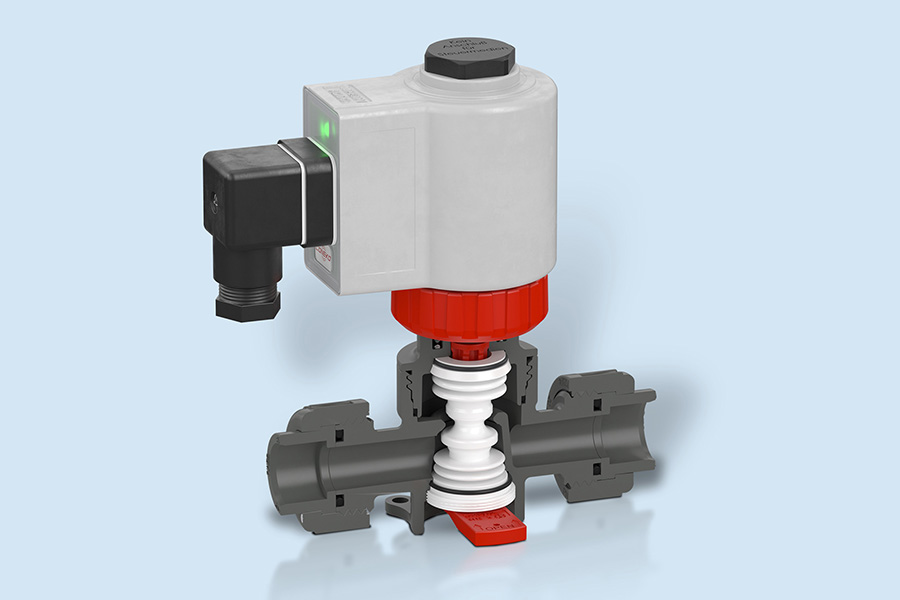
When Fritz Müller founded Gebrüder Müller Apparatebau GmbH & Co. KG (GEMÜ) in 1964, no one could have foreseen the unique success story that would emerge. Today, with the second generation at the helm, this hidden champion from the northeast of Baden-Württemberg has more than 2,500 employees and is a global market leader in valve, measurement, and control technology. In addition to two factories in Germany, GEMÜ also operates production facilities in Brazil, China, France, India, Switzerland, and the U.S. In many sectors, such as medtech and pharmaceuticals, semiconductor production, and the food and beverage industry, control of process media (gases, steams, and liquids) is essential.
GEMÜ has had a long tradition of plastics processing ever since Fritz Müller achieved a milestone in valve technology with the first process valve made of plastic (PVC) in 1964. Today, GEMÜ uses more than 100 different plastics in various processes to manufacture its comprehensive product portfolio. GEMÜ’s Development department drives innovation and develops customer-specific solutions that comply with the strictest standards – all tool and mold manufacturing takes place in-house. To meet the increasingly strict quality requirements in the field of injection molding, GEMÜ is already using measurement technology and process monitoring systems from Kistler at its locations in Germany, Switzerland, and France. The combination of cavity pressure sensors and monitoring and control systems that are directly integrated into the machinery allows for targeted development and optimization of the injection molding process based on case-specific criteria.
Efficient process development supported by data analysis
This year, GEMÜ began using STASA QC Optimize software from Kistler that allows for process optimization based on statistical test planning known as design of experiments (DoE).
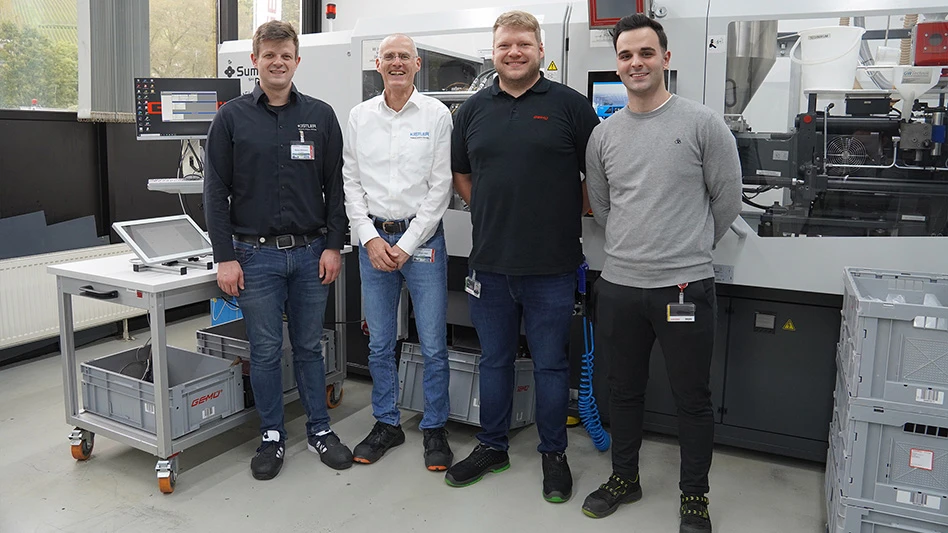
Marcel Fritzsche, process engineer and technology scout at GEMÜ, says: “I first became familiar with technology from Kistler for plastics processing during my time at university. With STASA QC, we have a development tool that allows us to develop processes based on data, and thus optimize the development of new, complex products – or even make these products possible in the first place.” Together with bachelor’s degree candidate Hekuran Pllana, Fritzsche tested out the potential of the software and is impressed with what it has to offer: “DoE-based process development is systematic and structured. This objective approach provides greater clarity in collaboration and shortens the path to injection molding processes that are ready for series production.”
In a current project, GEMÜ was faced with the challenge of achieving low surface roughness for a highly specialized part.
Pllana reports: “The existing production process did not meet our requirements. Without a suitable process foundation, we needed to redevelop the entire process chain. STASA QC Optimize provided vital support.”
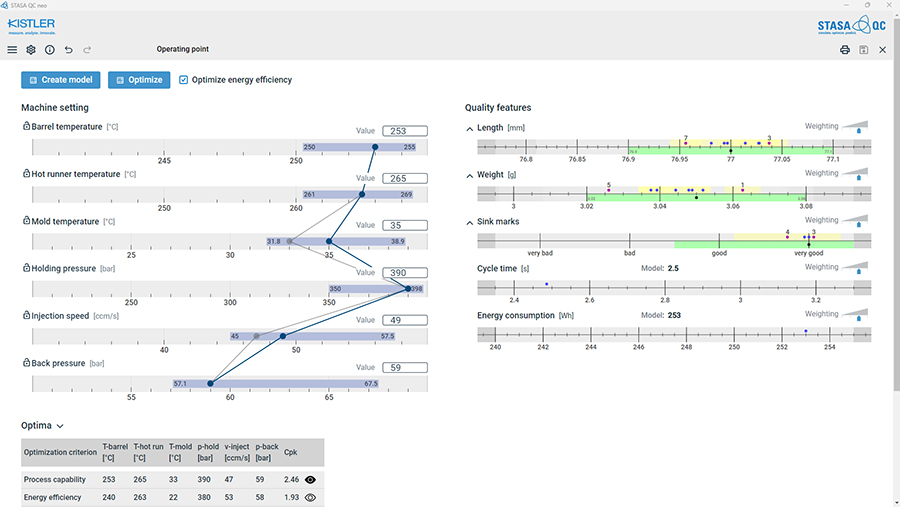
During statistical test planning with STASA QC, a pre-defined number of tests (at least 10) are carried out to determine the optimal machine and process parameters. The software analyzes typical actuating variables such as injection speed, holding pressure, injection pressure, and cylinder temperature; it then identifies main effects, causalities, and interactions, thus compiling comprehensive process knowledge.
“It is easy to operate, which means users can be trained and start using the software quickly. Another decisive factor was that STASA QC allows us to model attributive quality characteristics like surface quality,” Pllana continues.
Desired surface quality achieved with a high degree of process stability
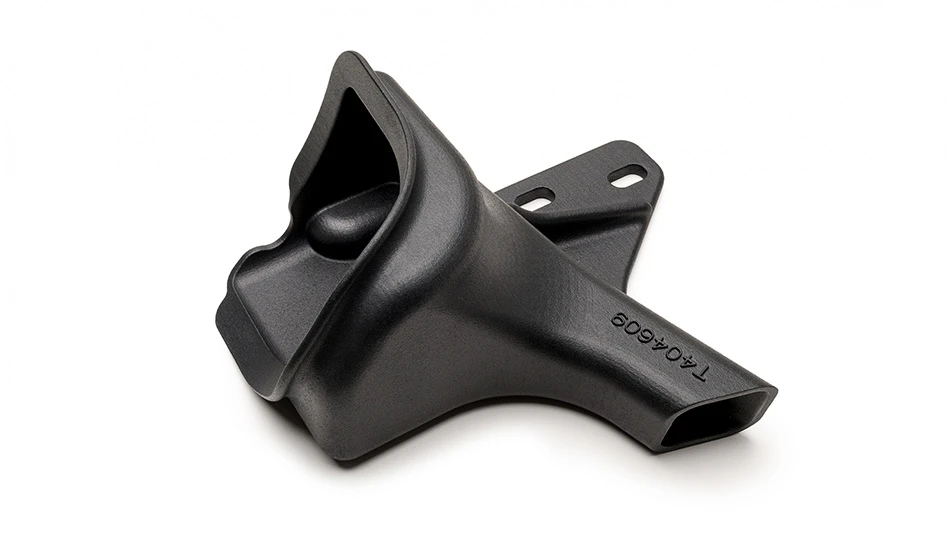
In this case, to achieve the desired surface quality, an additively manufactured device was integrated into the fully automated process, which was also validated via DoE. Because of the data analysis with STASA QC Optimize and after a total of three test series (DoEs), GEMÜ was able to implement a sustainable and efficient injection molding production process with a high degree of process control. This success also allowed Fritzsche and Pllana to achieve greater acceptance of the use of STASA QC within the GEMÜ Group: the software from Kistler is now used as standard in the second phase of mold validation for special product groups (meaning after the mold is inspected and approved in phase 1).
Fritzsche continues: “Thanks as well to the excellent support from Kistler, STASA QC Optimize offers us a software solution that enables robust, digitalized, future-proof production processes, all the way to digital twins. Thanks to precise data analysis across the entire development process, we can handle complex customer requests with exacting requirements in a targeted, efficient manner – now and in the future.”
Latest from Today's Medical Developments
- Case study: Transforming CNC machining through smart lubrication strategies
- Join the automation conversation
- Medtronic expands neurovascular portfolio with Scientia acquisition
- Enhanced visitor experience highlighted at TMTS 2026
- This week: Tube bending and workholding solutions to implement now
- Highly reliable electronic components drive medical innovations
- Compact centrifugal barrel tumbler finishing machine
- Medical device manufacturer affected by major cyberattack