MICROCARE
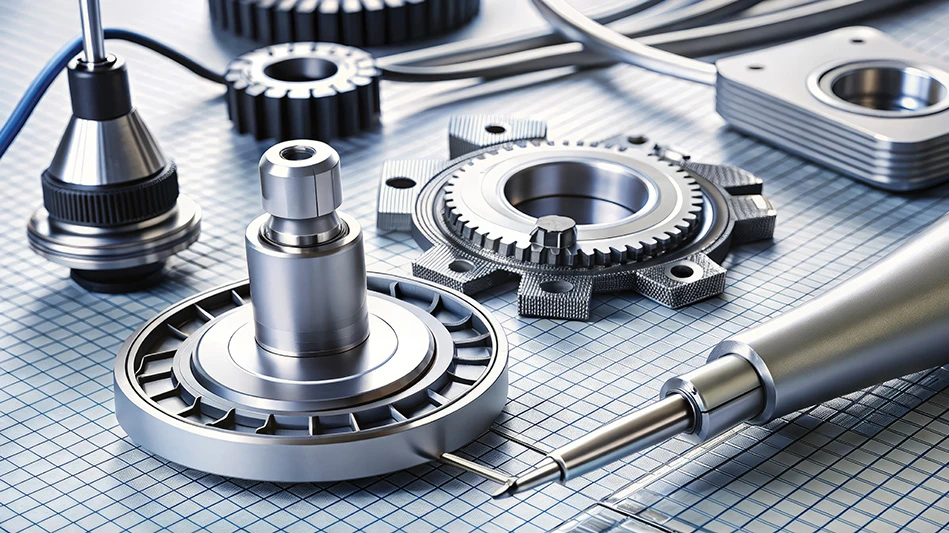
In medical device manufacturing, surface finish quality isn’t just about aesthetics – it directly affects how a device performs, how easily it’s sterilized, and how long it lasts in the field. As device designs become more complex and tolerances tighter, one subtle yet essential factor is earning more attention: the carrier fluid.
What are carrier fluids?
validations, or even aesthetic rejections during final inspection.
Carrier fluids are liquids used to transport cleaning agents, lubricants, or coatings during critical production steps such as cleaning, debinding, and coating. Valued for their ability to efficiently deliver active ingredients while evaporating cleanly, these fluids play a crucial role in achieving best results. However, selecting the
wrong carrier fluid can lead to cosmetic flaws, functional issues, or even regulatory noncompliance. Ideally, a carrier fluid delivers the active component to the surface and evaporates without leaving any residue behind, ensuring the desired effect is achieved without compromising the final product.
Why surface finish matters in non-implantable devices
From laparoscopic tools to ultrasound probes and electrosurgical handpieces, non-implantable medical devices must maintain smooth, uniform surfaces for a variety of reasons. A rough or inconsistent finish can:
- Interfere with precise mechanical movement
- Trap bioburden, increasing the risk of cross-contamination
- Accelerate wear in components subjected to repeated sterilization
- Affect the bond strength of coatings or lubricants
For many manufacturers, rejected parts can be directly tied to surface irregularities caused by poor cleaning, uneven coatings, or post-polishing residues. These defects, although often invisible to the naked eye, can result in functionality issues or failed validations during final inspection.
Even with precise machining and passivation processes, subtle factors such as residual cleaning agents or incompatible carrier fluids can compromise surface integrity and overall device performance.
Common surface-related device failures
Surface finish issues in medical device manufacturing aren't just cosmetic, they can signal deeper problems affecting device performance, patient safety, and regulatory compliance. Common surface-related failures include:
- Spotting or streaking from incomplete cleaning
- Poor adhesion of lubricious coatings
- Corrosion from surface contaminants
- Residue interfering with sterilization validation
- Visual flaws leading to product rejection
Finding and addressing these issues early – often by perfecting cleaning and coating processes – can help manufacturers support quality, reduce rework, and ensure consistent product reliability.
The role of carrier fluids in cleaning and coating
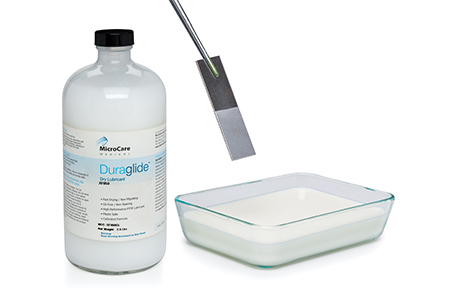
or coatings to the surface, then evaporates cleanly without
leaving residue to compromise the final product.
In cleaning applications, carrier fluids lift and remove debris such as polishing compounds, machining oils, or even fingerprints. In non-implantable devices where sterility and appearance are critical, cleaning efficiency is everything.
For example, a manufacturer of reusable endoscopic forceps might switch from a manual wipe-down process using aqueous detergents to a vapor degreasing system with an engineered carrier fluid. This could help cut post-cleaning particle counts and improve surface gloss consistency across production batches.
Carrier fluid characteristics such as drying rate and surface tension are critical. A fluid evaporating too slowly can leave streaks or residue; if it evaporates too quickly it may not fully remove contaminants. Some aggressive fluids might even dull or etch a passivated stainless-steel surface.
In coating applications – such as applying PTFE or antimicrobial finishes – carrier fluids must enable even application and ensure the active ingredients bond well. Inconsistent spreading or slow drying can result in patchy coatings or microbubbles that degrade performance.
For instance, a diagnostic device maker applying hydrophilic coatings to polymer housings using an older solvent system might find an uneven film thickness. Switching to a modern carrier fluid could eliminate the issue, resulting in more reliable coating adhesion and reduced waste.
3 carrier fluid properties affecting coating performance
When it comes to applying coatings to non-implantable medical devices, the carrier fluid properties can make or break the final result. Three key carrier fluid characteristics play an important role in how coatings spread, adhere, and perform.
- Surface tension: Affects how well the fluid spreads across surfaces.
- Drying rate: Affects coating uniformity and integrity.
- Solvency power: Determines how well active ingredients are carried and deposited.
Understanding and optimizing these fluid properties is essential for achieving consistent, high-quality coatings that meet functional and regulatory requirements.
Choosing the right carrier fluid

electrosurgical handpieces, non-implantable medical devices
must retain smooth, uniform surfaces to ensure proper
functionality and performance.
When selecting a carrier fluid for medical device manufacturing, several factors must be considered to ensure the best performance and compliance. From material compatibility to regulatory requirements, the right carrier fluid can affect everything from cleaning efficiency to operational costs. Below are key considerations for choosing the ideal fluid for your production process.
- Material compatibility: Medical devices are made from a variety of materials – stainless steel, polymers, anodized aluminum, silicone. Not all carrier fluids interact well with every substrate. For example, fluids with aggressive solvency may stress crack polycarbonate casings or degrade silicone seals in powered surgical tools.
- Residue-free cleaning: A carrier fluid used in final cleaning must leave no residue that could interfere with downstream sterilization or patient safety. According to AAMI ST79, surface residues from cleaning chemicals can cause sterilization failure and compromise device performance in use.
- Regulatory and environmental compliance: Many facilities are phasing out legacy solvents like nPB and TCE due to toxicity concerns and tightening global regulations. New-generation carrier fluids, especially hydrofluoroethers (HFEs) and hydrofluoroolefins (HFOs) – must meet standards such as REACH, RoHS, and FDA guidance while maintaining high performance.
- Operational efficiency: Carrier fluids evaporating cleanly at ambient temperatures can speed up production lines by eliminating drying ovens or extra rinse cycles. For example, a maker of electrosurgical pencils could see as much as a 30% cycle-time reduction after adopting a low-boiling, nonflammable carrier fluid optimized for vapor degreasing.
- Process efficiency: Fluids drying quickly at room temperature can increase throughput by eliminating drying steps. Others may enable batch cleaning or closed-loop vapor degreasing, saving time and reducing solvent use.
Questions to ask your carrier fluid supplier
Choosing the right carrier fluid for medical device manufacturing requires careful consideration of several factors to ensure both performance and compliance. When evaluating potential suppliers, it’s important to ask the right questions to avoid costly mistakes. Key inquiries include:
- Is the carrier fluid compatible with all materials in the device?
- Does it leave behind residue or require rinsing?
- How does it perform in closed-loop cleaning systems?
- Is it compliant with global environmental and safety standards?
These considerations help ensure the fluid will deliver the best results and align with regulatory requirements and sustainability goals.
Engineering surface precision through smart carrier fluid choices
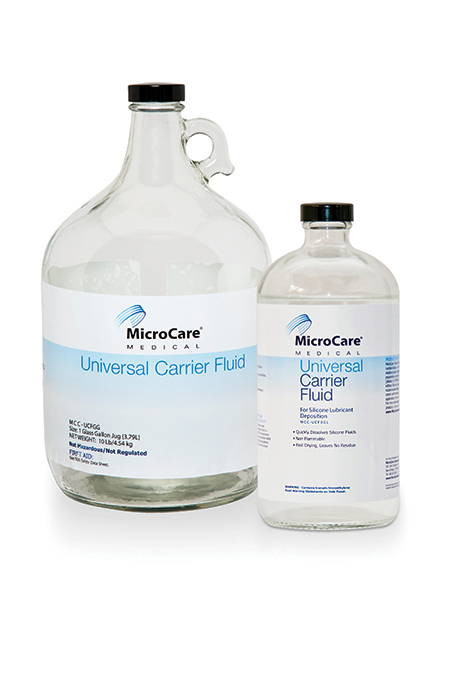
and lubricating across a variety of medical device components.
The best carrier fluids available today are specially engineered for high-precision applications. Fluorinated solvents and HFEs offer excellent solvency while protecting delicate surfaces. Their low surface tension allows them to reach tight features found in laparoscopic or diagnostic instruments, and their clean evaporation minimizes residue. When used with vapor degreasers, ultrasonic baths, or precision coating equipment, these fluids reduce finish variation and help ensure consistent, high-quality results. Switching to the right carrier fluid can significantly improve process outcomes and end issues such as spotting, leading to more reliable and consistent performance.
Surface finish metrics that matter
To assess and ensure surfaces meet the required standards, manufacturers rely on specific metrics providing insight into the texture and cleanliness of a device's surface. These key surface finish metrics help identify issues such as roughness, contamination, and residue, allowing for more accurate quality control and better product outcomes.
- Ra (roughness average): Measures average deviation from the mean surface height.
- Rz (average maximum height): Reflects extremes in surface topography.
- Particle count: Indicator of surface contamination post-cleaning.
- NVR (non-volatile residue): Residue left after fluid evaporation.
Final thoughts
Surface finish is more than skin deep – it’s a fundamental part of delivering dependable, safe, and effective medical devices. And while much focus is placed on machining or polishing techniques, the carrier fluids used behind the scenes can be just as important.
Choosing the right carrier fluid helps ensure every device – whether it’s a forceps tip, a diagnostic sensor, or a powered surgical tool – leaves production with a clean, smooth, and functional finish. By understanding how these fluids interact with materials, coatings, and cleaning systems, manufacturers can avoid costly rework and meet the high expectations of today’s healthcare market.
Latest from Today's Medical Developments
- The top performer in medical device regulation: Singapore
- Sandvik Coromant expands CoroDrill DE10 drill line
- #84 Manufacturing Matters - Defense Industry Trends with Greenwich Capital Group
- Case study: Transforming CNC machining through smart lubrication strategies
- Join the automation conversation
- Medtronic expands neurovascular portfolio with Scientia acquisition
- Enhanced visitor experience highlighted at TMTS 2026
- This week: Tube bending and workholding solutions to implement now