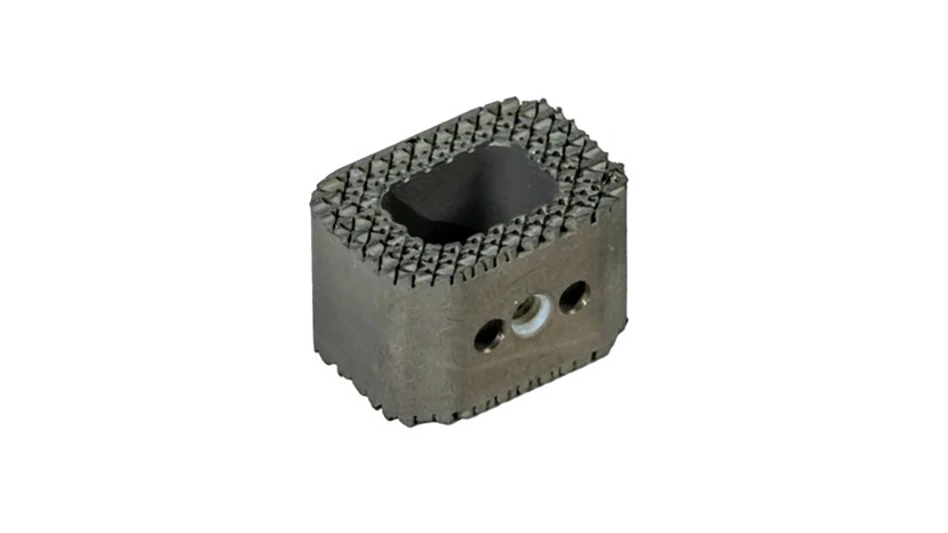
The PMT Cervical Cage, from Providence Medical Technology Inc., is a novel minimally-invasive implant and delivery system for cervical fusion procedures, and is indicated for use in skeletally mature patients with degenerative disc disease (DDD) of the cervical spine (C3-C7) with accompanying radicular symptoms at one disc level. DDD is defined as discogenic pain with degeneration of the disc confirmed by patient history and radiographic studies. Patients should have received at least six weeks of non-operative treatment prior to treatment with the device. Devices are intended to be used with autogenous bone graft and supplemental fixation, such as an anterior plating system.
This FDA clearance completes the company’s current U.S. product portfolio, which also includes DTRAX Spinal System, DTRAX Graft, and PMT Bone Screws. DTRAX Spinal System and DTRAX Graft are on the market, and PMT Cervical Cage and PMT Bone Screws will launch the third quarter of 2013.
“Providence has now developed a broad minimally-invasive cervical product portfolio,” comments Jeff Smith, CEO of Providence Medical Technology. “Our U.S. launch of PMT Cervical Cage will build upon our successful international experience, where we have sold over 500 DTRAX Facet System units since its launch in Q4 of 2011. The clinical outcomes achieved by our customers and their patients have surpassed our expectations, and we are excited to bring this clinical value to U.S. surgeons and patients.”
Latest from Today's Medical Developments
- Gore completes acquisition of Conformal Medical
- Medical textiles designed for cardiovascular, orthopedic, dental prosthetic applications
- Micro-precision 3D printing: Trends and breakthroughs in medical device manufacturing
- One-component, dual-cure adhesive system for medical device assembly
- #82 Manufacturing Matters - Forecasting 2026 with GIE Media's Manufacturing Group
- Flexing prosthetic finger offers lifelike appearance and movement
- How the fast-evolving defense market impacts suppliers
- Medtronic’s Hugo robotic-assisted surgery system makes US debut