CREDIT: TANAKA
Precious metals are a critical component in modern medical devices. Yasutaka Ihara, director and corporate office at TANAKA Precious Metal Technologies Co., who has led industrial precious metal product go-to-market strategies across the world, offers his perspective on precious metal trends impacting the medical manufacturing industry.
(Note: Precious metals refer to a group of eight metallic elements on the periodic table: silver (Ag), gold (Au), platinum (Pt), palladium (Pd), iridium (Ir), rhodium (Rh), ruthenium (Ru), and osmium (Os).)
Please provide a brief overview of how precious metals are commonly used in medical device manufacturing.
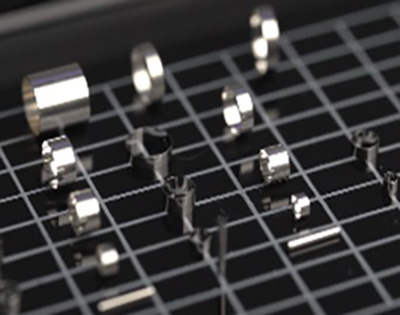
Platinum, gold, and other precious metals are used in medical device manufacturing because they provide biocompatibility, visibility inside the body (radiopacity under X-ray), low electrical resistance, and high material reliability. For these reasons, they are commonly used in surgical devices for minimally invasive treatments and in certain implant components. In addition, silver offers excellent low electrical resistance and is frequently used as an electrode material in inspection equipment and sensing applications.
What are the advantages of precious metals over other materials for certain medical devices?
Precious metals meet the most critical requirements for medical devices – biocompatibility and high reliability – while also enabling additional functional benefits such as radiopacity under X-ray and low electrical resistance. In addition, the potential to further enhance performance through the development of new alloy compositions is currently being considered.
What are some current trends in the precious metals market, and how do they affect medical device manufacturing?
Recently, gold, platinum, and silver have been trending upward in price, largely attributed to geopolitical uncertainty. However, price volatility has historically been a normal feature of the precious metals industry, and the current market environment is not considered exceptionally unusual. Industrial demand remains stable, and required materials continue to be supplied through established supply chains. Although we closely monitor price movements, we don’t currently see immediate critical risks to medical device manufacturing.
What are some challenges facing the precious metals supply chain, and how is the medical device industry adapting to those challenges?
As noted earlier, the precious metals industry is accustomed to price fluctuations, and there are currently no significant issues with maintaining appropriate procurement and supply to meet industrial demand. That said, rising precious metal prices do have some impact on component costs, and we expect momentum around precious metal recycling within the medical device industry to increase. This includes not only limited reuse of medical devices, but also recycling processes that recover precious metals from end-of-use devices and refine them back to high-purity metals – typically 99.95% or higher – so they can be reintroduced into the materials supply stream.
How much of a role does recycling currently play in the supply chain, and how much will it play in the future?
At present, from a volume perspective, recycling is not yet considered to have a significant impact on the supply chain. In the industry, reuse and recycling are sometimes viewed as the same, but they are different. Regarding reuse, meaning the use of medical devices multiple times, this has started in a few countries; however, there are still limitations on target products and the number of times they can be used, and it remains in a limited trial stage. Reuse requires approval from regulatory organizations in each country, and the review and approval process takes time. Rather than expanding rapidly, it’s expected to gradually penetrate the market based on accumulated experience.
On the other hand, regarding recycling, which involves recovering precious metals from used medical devices and refining them back to high-purity raw materials, the basic technologies have already been established in industry, including in the electronics sector, where there is a long track record. Enhancing market schemes to collect used medical devices as valuable resources rather than disposing of them is expected to become increasingly important going forward.
How can medical device manufacturers adapt to other current industry challenges such as tariffs and economic and geopolitical instability?
Geopolitical developments and tariffs continue to evolve, and they must be closely monitored. At present, we don’t see significant challenges in the import or export of precious metal materials. The precious metals industry is accustomed to price volatility, and supply chains driven by actual industrial demand have not experienced major disruption. To further enhance procurement stability and strengthen supply resilience, reinforcing regional recycling frameworks would be a practical first step.
As many medical devices become smaller and more precise, how do these requirements impact the materials and technology used to manufacture them?
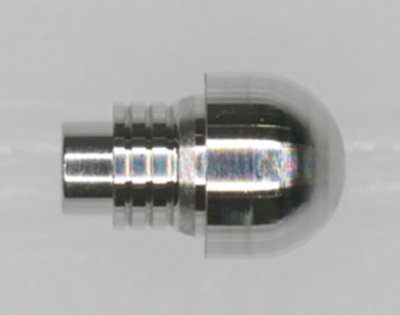
To meet the demands of smaller and more precise medical devices, it’s necessary to continue enhancing performance through the development of new alloys and related material innovations. In materials development, the use of simulation and other digital tools to accelerate development speed will remain important. At the same time, demand for high-precision processing technologies is increasing. Process development such as using laser machining, along with quality stabilization through image-based inspection, continues to advance.
How do you foresee medical devices changing in the future, and what role will precious metals play in their development?
As medical technology continues to advance, minimally invasive treatments that reduce the physical burden on patients are expected to expand further. Minimally invasive approaches are essential to improving patients’ quality of life (QOL) and are likely to remain a major trend in future healthcare. In that context, precious metal materials – with inherent characteristics such as biocompatibility, reliability, and visibility within the body – are expected to play an indispensable role in the development of next-generation medical devices.
What factors do you see impacting the precious metals supply chain in the future, and how will those factors impact medical device manufacturing?
If geopolitical uncertainty persists over the long term, the precious metals market is likely to adapt to that environment. Precious metals have always been finite and high-value materials, and historically they have been selected only when they provide performance that justifies their cost. That trend may become even more pronounced. In the short term, efforts to expand recycling of precious metals from end-of-life medical devices are expected to continue. Over the medium to long term, development will likely focus on precious metal materials capable of delivering high performance with reduced material content.
Latest from Today's Medical Developments
- Near-universal pilot scale mixer
- Cutting tool shipments increase from 2024 to 2025
- ZOLLER to hold smart manufacturing summit in May
- UNISIG launches assemble-to-order gundrilling machine program
- #83 Manufacturing Matters - Workholding Roundtable
- Arthrex releases all-suture implant for ACL reconstruction
- Increase speed, productivity, and agility with automation technology
- Medical Component Specialists expands into Costa Rica