CREDIT: COURTESY OF ROWAN UNIVERSITY
The rapid development of artificial intelligence and the usability of large language models have promised to transform industries on a large scale, but first engineers must figure out how to integrate intelligent systems with real-world manufacturing methods.
To accomplish that goal, Rowan University’s Digital Engineering Hub (DEHub) is merging smart technology with advanced manufacturing methods through its well-equipped lab launched this fall.
Housed at Henry M. Rowan College of Engineering’s Rowan Hall and directed by Antonios Kontsos, Ph.D., the DEHub lab is capable of digitizing real-world objects, as well as creating new objects based on human- or machine-engineered designs.
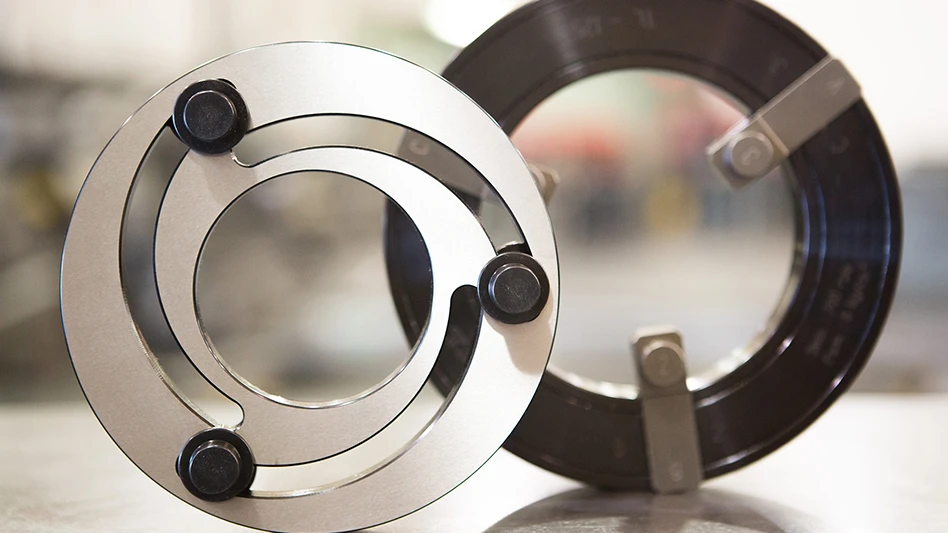
The lab features 3D polymer and metal printers, 3D scanners for digitizing existing objects, and devices for mechanical sensing and testing. DEHub’s key piece of equipment is DMG MORI’s LASERTEC 30 SLM US, the first metal additive manufacturing equipment of its kind.
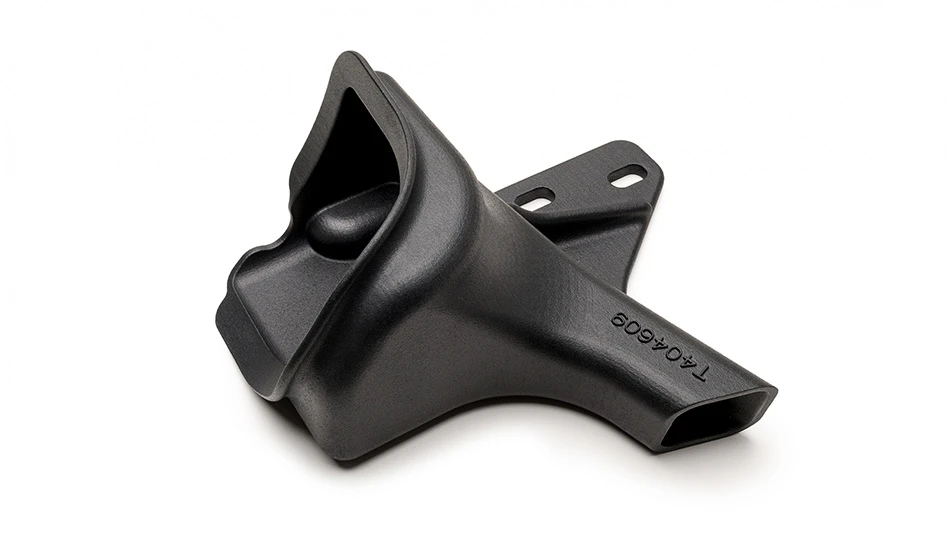
Designed and assembled in the United States, the 3D metal printer uses a high-powered laser to melt and fuse thin layers of metal powder to create a solid component. The machine’s distinguishing features include its adaptive beam control, improved production process, and interconnectivity, allowing the detection – and correction – of flaws in real time during the construction process.
The lab’s processing power is fueled by a highly secure computer cluster named Pythia, after the Oracle of Delphi in ancient Greece. Purpose-built to drive the lab’s systems, Pythia can receive and process terabytes of information instantly.
“We are the first academic research group in the world to connect a supercomputer for this type of machine,” says Kontsos, the Henry M. Rowan Foundation Endowed Professor in the Department of Mechanical Engineering. “The data we’re collecting – such as part temperature and laser information – is in the order of terabytes, so we need the computational power coupled with live -streaming capabilities to synchronously store and process this information.”
Focused first on federally funded research for the Defense Advanced Research Projects Agency, DEHub aims to work across a wide range of manufacturing sectors, including the defense, manufacturing, pharmaceutical, biotechnology, energy and civil infrastructure as well as robotics industries.
Interest is already high. DEHub’s recent launch event attracted representatives from companies as far away as California, Texas, and even Australia.
“Our horizon is not to improve the Glassboro economy only,” Kontsos says, “We want to improve it by being a resource worldwide.”
Latest from Today's Medical Developments
- Case study: Transforming CNC machining through smart lubrication strategies
- Join the automation conversation
- Medtronic expands neurovascular portfolio with Scientia acquisition
- Enhanced visitor experience highlighted at TMTS 2026
- This week: Tube bending and workholding solutions to implement now
- Highly reliable electronic components drive medical innovations
- Compact centrifugal barrel tumbler finishing machine
- Medical device manufacturer affected by major cyberattack