As he did when he was a tank squadron commander, retired Canadian Forces colonel Greg Hug sets for himself objectives: short, medium and long-term.
But the horizons of his ordered ambitions have changed utterly in the six months since a body surfing accident in Barbados left him paralyzed from the neck down. Hug is focused now on mastering a new breathing method, reducing his dependence of a mechanical ventilator, and graduating from the Ottawa Hospital’s intensive care unit.
“I am focused on having a mission and accomplishing that mission,” said Hug, 63, who commanded an army tank squadron and Lord Strathcona’s Horse, an armoured regiment, during his military career.
“Fundamentally, it’s about defining objectives and coming up with a plan to achieve those objectives, and executing the plan. But this is obviously going into an unknown area for me.”
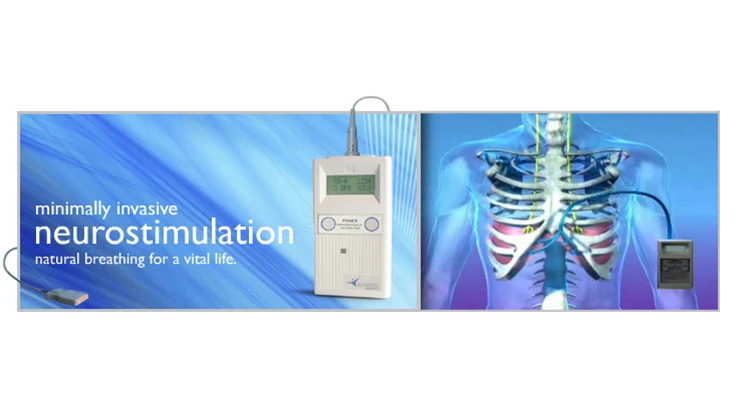
Hug is today able to breathe on his own for extended periods of time thanks to a high-tech pacemaker that helps power his lungs. The device – the NeuRx DPS – was installed in late July in a first-of-its-kind operation in Ottawa.
The pacemaker sends electric pulses to the diaphragm, the layer of muscle and tendon that expands the ribs during the breathing process. The dome-shaped diaphragm is the body’s major breathing muscle: When it contracts, air is sucked into the lungs.
Click here to read the full article by Andrew Duffy on Ottawa Citizen website.
Latest from Today's Medical Developments
- NextDent 300 MultiJet printer delivers a “Coming of Age for Digital Dentistry” at Evolution Dental Solutions
- Get recognized for bringing manufacturing back to North America
- Adaptive Coolant Flow improves energy efficiency
- VOLTAS opens coworking space for medical device manufacturers
- MEMS accelerometer for medical implants, wearables
- The compact, complex capabilities of photochemical etching
- Moticont introduces compact, linear voice coil motor
- Manufacturing technology orders reach record high in December 2025