CREDIT: AdobeStock_1384765638
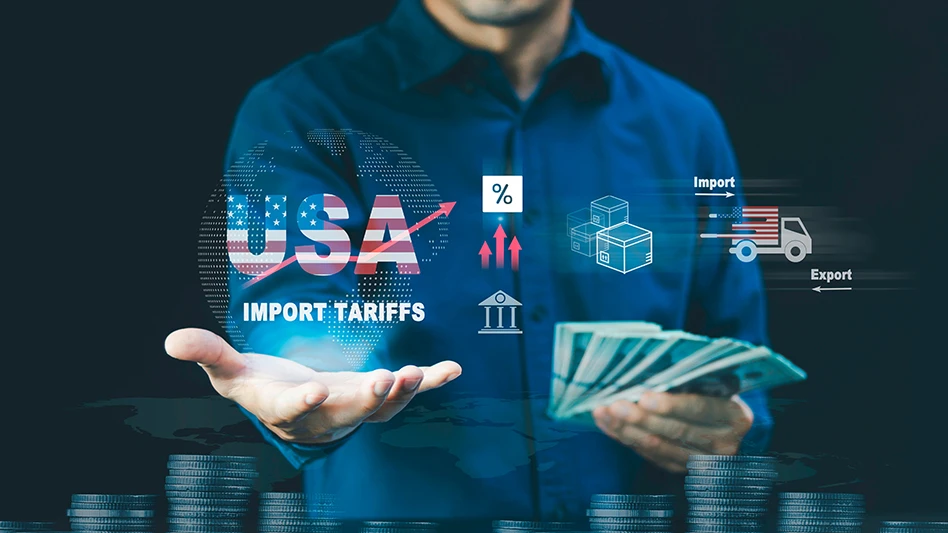
The Trump administration has initiated comprehensive national security investigations into imports of robotics, industrial machinery, and medical devices – a development that could lead to new tariffs and increased costs across multiple sectors. On September 2, the Department of Commerce opened these investigations under Section 232 of the Trade Expansion Act to evaluate whether such imports pose threats to U.S. national security, according to Federal Register documents released Wednesday.
Expanded scope of investigation
The investigations significantly broaden the range of products potentially subject to higher tariffs. Medical items under review include:
- Personal protective equipment (surgical masks, N95 respirators, gloves)
- Medical consumables (syringes, needles)
- Medical equipment (wheelchairs, hospital beds)
- Advanced medical devices (pacemakers, insulin pumps, heart valves)
Notably, pharmaceuticals – including prescription drugs, over-the-counter medications, biologics, and specialty drugs – are excluded from this probe as they're being examined in a separate Section 232 investigation.
Industry response and concerns
AdvaMed, representing medical technology manufacturers, emphasized that 70% of medical products used in U.S. hospitals are already domestically produced across manufacturing facilities in all 50 states. The organization expressed confidence that the investigation would "reinforce the fact that U.S. medtech manufacturing is strong" and argued that lower tariffs would stimulate additional domestic manufacturing and job creation.
Broader trade policy context
These investigations represent an expansion of the administration's use of Section 232 authority, previously applied to automobiles, steel, aluminum, and copper. Ongoing investigations also cover pharmaceuticals, semiconductors, and related components, reflecting Washington's strategic focus on reducing dependence on foreign supply chains. Any resulting tariffs would layer onto existing country-specific duties, though the European Union and Japan have secured agreements potentially protecting them from additional levies.
Economic impact considerations
The U.S. relies heavily on imports for machinery, with Mexico and China accounting for over 18% and 17% respectively of total U.S. machinery purchases in 2023, according to U.S. International Trade Commission data. The automotive sector faces particular exposure, having installed 13,747 industrial robots last year – the largest demand among all industries. Most of these robots were imported, with limited domestic production capacity.
Healthcare cost concerns
Industry leaders have raised significant concerns about potential healthcare cost increases. Scott Whitaker, AdvaMed's CEO, warned in April that supply chain disruptions and higher costs would ultimately burden taxpayer-funded programs including Medicare, Medicaid, and Veterans Health Administration. Similarly, Rick Pollack of the American Hospital Association cautioned that "disruptions in the availability of these critical devices – many of which are sourced internationally – have the potential to disrupt patient care."
The Commerce Department is currently soliciting industry input on demand projections, domestic production capacity, foreign supply chain dependencies, and the impact of foreign subsidies and trade practices.
Latest from Today's Medical Developments
- Case study: Transforming CNC machining through smart lubrication strategies
- Join the automation conversation
- Medtronic expands neurovascular portfolio with Scientia acquisition
- Enhanced visitor experience highlighted at TMTS 2026
- This week: Tube bending and workholding solutions to implement now
- Highly reliable electronic components drive medical innovations
- Compact centrifugal barrel tumbler finishing machine
- Medical device manufacturer affected by major cyberattack