Over the past two and a half years Unicut has re-engineered most the components for a needle-less insulin delivery system. This saved assembly time, reduced cost and gave the customer a more reliable product.
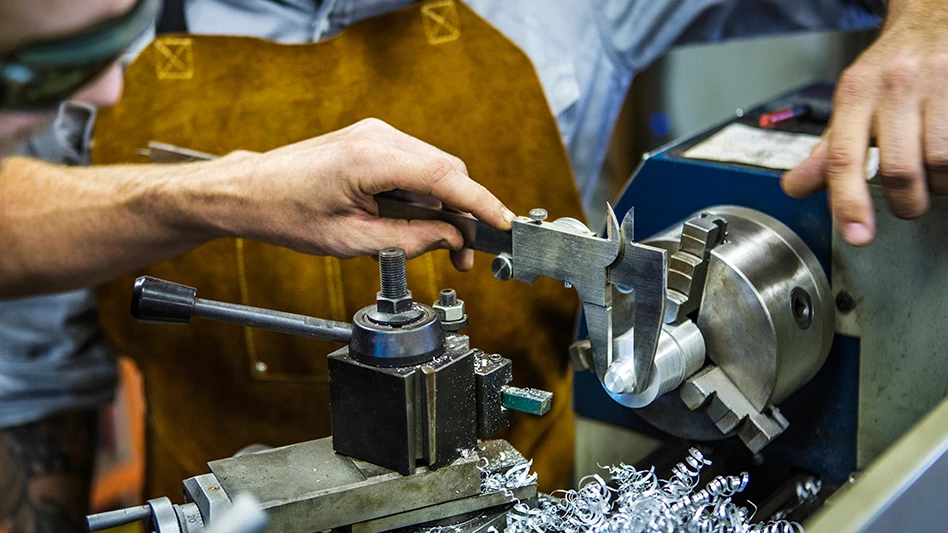
Unicut was asked to quote for the job three years ago. Many of the parts for this medical device were very complicated involving difficult materials, and Unicut’s turn-milling capability allowed it to keep costs down by combining multiple operations into single cycles.
The company won the £230,000 contract to produce 10,000 sets of 14 parts – but the parts it is making now bear no resemblance to the original quotation drawings says joint managing director Jason Nicholson. “Over the past 2 ½ years we have worked closely with this Dutch customer giving design-for-manufacture advice to help develop the components. In addition to general production engineering input, some parts were redesigned as two separate items to simplify production. However, due to the capability of our Citizen sliding head and Miyano fixed head turn-mill centres, others were combined into more complicated single parts in order to ensure geometric relationships of features, simplify the final assembly and reduce production costs as well as guaranteeing function of the critical needle-less device.”
As part of its customer support service, Unicut directors also provided specification advice on material, changes to material specifications for machinability, as well as protective coatings to prevent wear on critical components and ensure long-term accuracy of the device and to improve performance.
During this initial period, the flexibility of Unicut’s 25 turn-mill centers and non-contact automatic measuring systems enabled the companies to work closely together on prototype development. This process even went to the extent of making samples to maximum, mid and minimum tolerances, so that product development trials could be performed to ensure that functionality of the assembled device would never be compromised.
The demand for needle-less drug administration devices is predicted to rise rapidly due to their ability to deliver, in a fraction of a second, a precise micro-thin stream of insulin through a specially designed precision orifice at high velocity that penetrates the skin and is deposited into the subcutaneous (fatty) tissue. They eliminate risk of accidents from needle stick injuries and contamination, are ideal for people who dislike injecting with needles or can develop skin problems and remove any disposal problems associated with a sharp object.
Latest from Today's Medical Developments
- NextDent 300 MultiJet printer delivers a “Coming of Age for Digital Dentistry” at Evolution Dental Solutions
- Get recognized for bringing manufacturing back to North America
- Adaptive Coolant Flow improves energy efficiency
- VOLTAS opens coworking space for medical device manufacturers
- MEMS accelerometer for medical implants, wearables
- The compact, complex capabilities of photochemical etching
- Moticont introduces compact, linear voice coil motor
- Manufacturing technology orders reach record high in December 2025