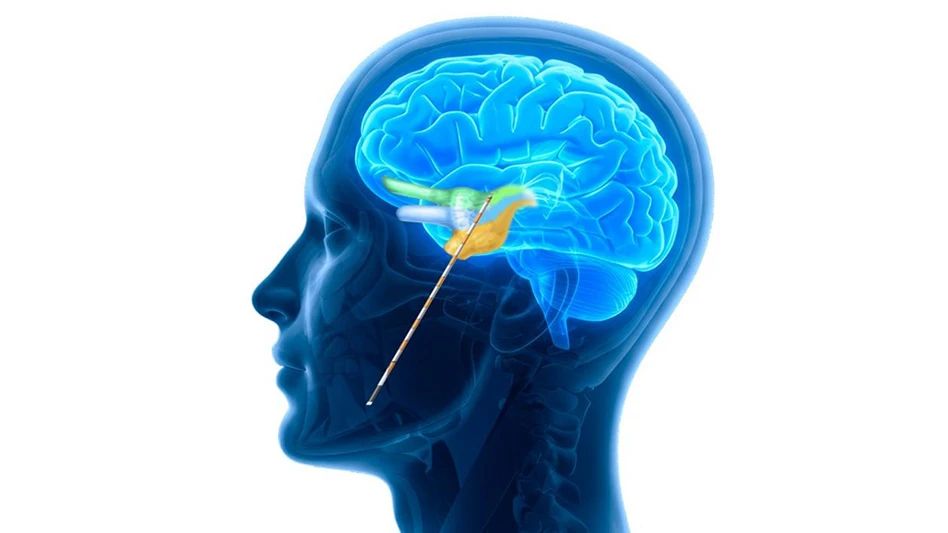
CREDIT: NEUROONE
Trigeminal neuralgia (TN) is a debilitating, chronic syndrome that causes sudden, severe, electric shock-like pain in the face. While TN isn’t life-threatening, it can severely alter quality of life and disrupt everyday activities, such as talking, chewing, and smiling by triggering intense bouts of pain. The condition occurs when a blood vessel puts pressure on the trigeminal nerve near the brainstem, which provides sensation to the face and head.
Several types of treatments, surgically and through medications, can help manage symptoms, but it is typically a long-term condition. Many patients do not see results with medications alone and require some sort of surgical treatment.
University Hospitals is the first health system in the world to offer a new type of minimally-invasive treatment with NeuroOne’s OneRF Trigeminal Nerve Ablation System. The two initial patients reported pain relief from the procedure without complications.
During the procedure, a needle is inserted through the cheek, guided by X-ray, to the trigeminal (Gasserian) ganglion. Radiofrequency energy creates heat to lesion, or partially ablates, the specific nerve fibers that transmit pain. Patients are sedated during the procedure and woken up to confirm the areas of treatment.
“This type of surgery has been performed for many decades with a radiofrequency probe, although this requires waking the patient up multiple times during the surgery and is only capable of testing and treating one pain distribution at a time,” explains neurosurgeon Michael Staudt, MD, the Lincoln Endowed Chair in Brain Health and an Associate Professor of Neurological Surgery at University Hospitals. “This new ablation probe is a step forward for our patients. It is a multi-contact probe designed to test and treat multiple nerve distributions without the need for repositioning. It also simplifies hardware with a unified setup. Typically, multiple components from different manufacturers are needed.”
Ideal candidates for this surgery are patients with TN who haven’t had success with medications and have symptoms in the cheek and jaw. Those who prefer a more minimally invasive procedure compared to open brain surgery, as well as older patients or those with medical comorbidities, are also good candidates for this treatment option.
“Pain relief is often immediate, with some numbness over the area of pain,” explains Dr. Staudt. “The NeuroOne multi-contact probe allows for better targeting and temperature control, to potentially reduce procedure times and improve patient comfort. We’re thankful to be able to offer this new treatment option to patients and look forward to helping them manage their symptoms more effectively.”
Latest from Today's Medical Developments
- US Paralympian partners with Autodesk to advance high-performance prosthetics
- Take a break and learn something new about manufacturing over lunch
- DMG MORI to invest more than $40.5 million in Illinois expansion
- Regulatory roundup: February 2026
- Guill Tool releases three new extrusion products
- Workholding Roundtable Webinar
- Preventive and predictive maintenance in medical device manufacturing
- 3D Systems expands NextDent Jetted Denture Solution