AdobeStock | 568471281
While digital twins have their origin in aerospace, they’ve become a staple in design and manufacturing across industries. As product development becomes more complex, with increasing numbers of people involved and stages to go through, digital twins have become integral to the entire process. In the competitive world of medtech, digital twins can play a crucial role in getting devices to market – from the very beginning.
“I see many different definitions of what a digital twin is for,” says Jason Ghidella, principal product manager at MathWorks. “Here at MathWorks, we look at it as a virtual representation of the system a customer is trying to build and deliver to their customers. It's highlighting the behavior of that system, and it has a very specific purpose.”
MathWorks, a developer of mathematical computing software, offers solutions aimed at streamlining product development. Its two main products, Simulink and MATLAB, help customers combine digital twins and Model-Based Design to navigate the full end-to-end process from design to market.
Removing ambiguity, miscommunication
Model-Based Design goes hand in hand with digital twin technology as both leverage simulation to understand complex ideas and behaviors. When used throughout the product development cycle, the combination of the two can significantly reduce time to market of complex medical devices compared to a more traditional workflow.
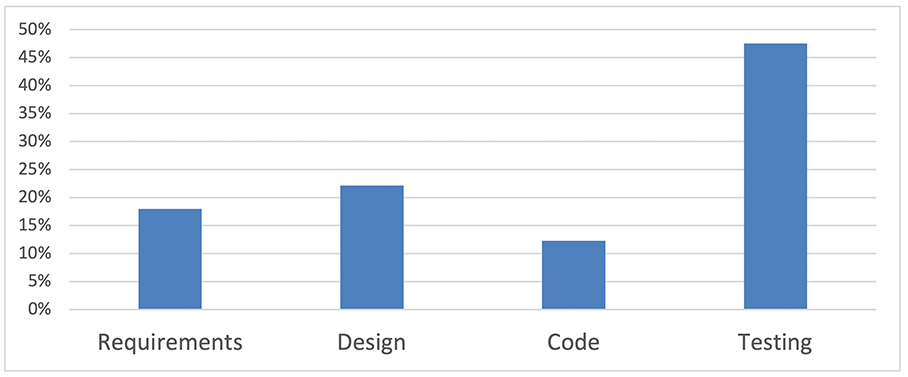
A traditional design approach is document based, Ghidella explains, starting with laying out the requirements for a medical device – what it will do, what standards and certifications it will meet, etc. However, with the complexity of modern medical devices and the numerous people involved in development, those requirements can be interpreted slightly differently by various readers. Those slight differences in interpretation don’t become apparent until later stages, when the product has been physically prototyped and is being tested. By that point, a lot of time and money has been spent only to have to backtrack.
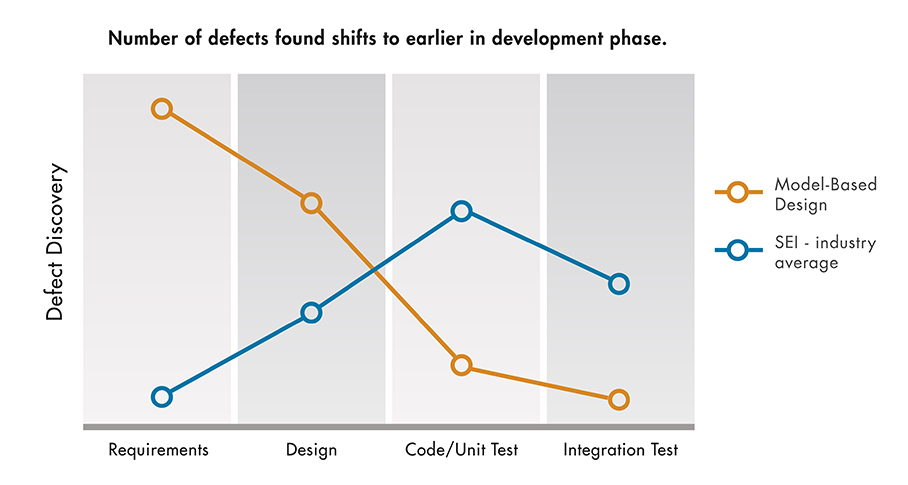
Model-Based Design, as its name suggests, uses an executable model to represent the product requirements, offering a clearer understanding and visualization of what’s needed – and how well the product is meeting those needs.
“Model-Based Design really removes the ambiguity in those requirements,” Ghidella explains. “You hand a model to each of the different development teams and it gives you this speed, because you're able to start testing by running the simulation. Effectively, you start verifying as soon as you build the model, and so you shift the verification earlier into the process.”
A visual model allows the different teams involved to more easily run through various scenarios and share feedback, helping them align in a more coherent way. Model-Based Design and digital twins also enable more solid traceability, automatically generating the documentation necessary to ensure compliance. Automation is another key component of Model-Based Design – the other half complementing the modeling and simulation aspect, as MATLAB presents it. Automating steps such as verification, reporting, and coding in complex systems development can significantly reduce errors and accelerate processes.
Model-Based Design in the real world
Simulation doesn’t stop at market launch. Many medical devices use Internet of Things (IoT) technology to collect and share data, allowing clinicians to better monitor patients’ health and manufacturers to assess device performance in the real world.
“By bringing that data back in house, I can then use my digital twin to run that data through and see and understand why it’s performing the way it's performing,” Ghidella says. “It might have hit a scenario I didn't consider before, and it's not acting as I expected. By playing that data from a device in the field back in the office, I can now understand what's happening, because I've got a digital representation of that device in the field, and I can improve it. I can change or tweak the performance of it, or make it more efficient, and then quickly make an update that I can download onto that device to make it meet a better performance goal.”
One notable example of MathWorks technology in action is the development of an artificial pancreas system by medtech developer Medtronic. The device monitors a patient’s glucose levels with a sensor beneath the skin, then transmits that data to an insulin pump that delivers the optimal dose of insulin to keep glucose at a healthy level – replacing the need for the patient to test their own blood sugar and inject themselves with insulin multiple times per day.
Several competitors were getting close to clinical trials as Medtronic was developing the highly sophisticated device, but by using Model-Based Design and building digital twins of its control systems, Medtronic was able to accelerate the early stages of development and release its device to customers two years ahead of competitors.
Another example involves surgical robotics developer Corindus (bought in 2023 by Siemens Healthineers), which developed a remote robotic surgery system allowing surgeons to operate on patients from miles away. The system, which expands access to lifesaving surgeries to patients in developing parts of the world where immediate surgical expertise may not be available, required extreme precision as well as advanced video capabilities without lags between the action in the operating room and the remote surgeon. The Corindus team used Model-Based Design and worked closely with MathWorks to overcome the operational challenges and develop the ahead-of-its-time video technology.
Building connections
Digital twins are well known to many designers and manufacturers as vital tools for virtual prototyping and testing products. Model-Based Design, however, presents digital twins as useful tools for much more. Instead of just simulating a physical object, users can simulate entire processes from start to finish.
“When people talk about digital twins, they’re always asking, what is your digital twin going to do?” Ghidella says. “Is it helping you in the initial stages of system engineering, in sizing different components? Is it helping create that detailed design? Is it helping in the operation and improving the performance of the device when it's in the field? There's a digital twin for many different purposes, and for us at MathWorks, it's all of those, from early system engineering stages, going into the detailed design, and into field operation.”
As medical devices become smarter and more connected, their developers and manufacturers must also be smarter and more connected – connected to each other, to the requirements of each development stage, and to the final goal of the project. Model-Based Design and the software facilitating it can help build those connections, creating a common language for teams across disciplines, reducing miscommunication and errors, and ensuring safety, compliance, and traceability from idea to launch.
Latest from Today's Medical Developments
- Case study: Transforming CNC machining through smart lubrication strategies
- Join the automation conversation
- Medtronic expands neurovascular portfolio with Scientia acquisition
- Enhanced visitor experience highlighted at TMTS 2026
- This week: Tube bending and workholding solutions to implement now
- Highly reliable electronic components drive medical innovations
- Compact centrifugal barrel tumbler finishing machine
- Medical device manufacturer affected by major cyberattack