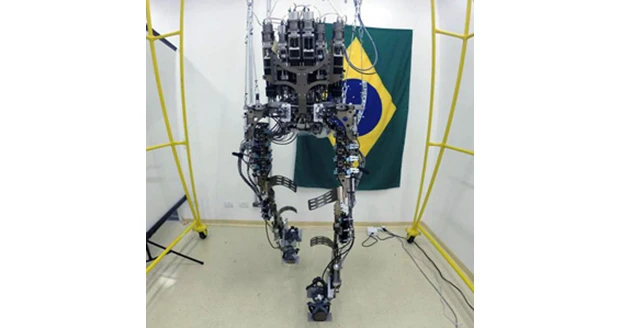
Brazil will begin hosting soccer’s 2014 World Cup, even though workers are still hurrying to pour concrete at three unfinished stadiums. At a laboratory in São Paulo, a Duke University neuroscientist is in his own race with the World Cup clock. He is rushing to finish work on a mind-controlled exoskeleton that he says a paralyzed Brazilian volunteer will don, navigate across a soccer pitch using his or her thoughts, and use to make the ceremonial opening kick of the tournament on June 12.
Click here to read the article by Antonio Regalado in MIT Technology Review.
Latest from Today's Medical Developments
- NextDent 300 MultiJet printer delivers a “Coming of Age for Digital Dentistry” at Evolution Dental Solutions
- Get recognized for bringing manufacturing back to North America
- Adaptive Coolant Flow improves energy efficiency
- VOLTAS opens coworking space for medical device manufacturers
- MEMS accelerometer for medical implants, wearables
- The compact, complex capabilities of photochemical etching
- Moticont introduces compact, linear voice coil motor
- Manufacturing technology orders reach record high in December 2025